
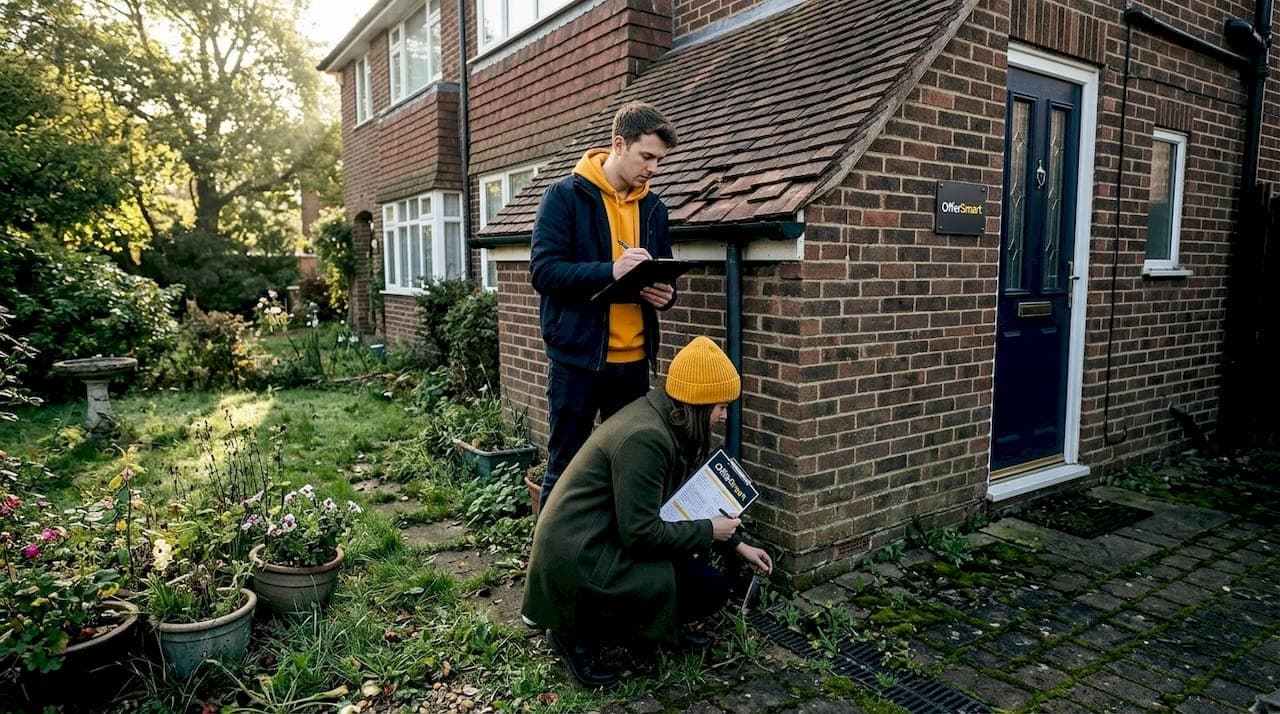
Buying your first home is one of the most significant financial decisions you will ever make, and a single viewing can determine whether you end up with a sound investment or a money pit. Most costly surprises that first-time buyers regret, from crumbling roofs to hidden damp, were visible during the viewing if you knew exactly what to look for. This guide gives you a practical, structured checklist of the red flags that matter most, explains why each one is serious, and shows you how to act on what you find before you sign anything.
Table of Contents
- How to approach a property viewing: checklist mindset
- Top interior red flags: from damp to electrics
- Exterior warning signs: roofs, walls, and drainage
- Red flag summary: comparison by cost and risk
- Why checklist discipline beats first impressions
- Take the next step with Offer Smart
- Frequently asked questions
Key Takeaways
| Point | Details |
|---|---|
| Checklists catch risk | A disciplined checklist approach prevents most expensive post-purchase regrets. |
| Top red flags | Look for damp, window/door issues, old electrics, and roof or drainage problems every time. |
| Many issues are visible | Most costly red flags can be spotted by buyers when you know what to look for. |
| Exterior signs matter | Survey limitations mean external defects require your extra attention on viewing day. |
| Ask follow-up questions | Always turn concerns into questions for the seller or your surveyor for full peace of mind. |
How to approach a property viewing: checklist mindset
Walking into a property and falling in love with the kitchen or the light in the living room is completely natural. But emotion is your biggest enemy at a viewing. When you are caught up in imagining your furniture in the space, you stop being an observer and start being a buyer, and that shift in mindset is precisely when problems get missed.
The solution is simple but powerful: arrive with a written checklist and work through it methodically. Treat the viewing like a structured inspection, not a tour. Move from room to room in a consistent order, note what you see, and resist the urge to skip sections because the property feels right.
Here is what a checklist mindset looks like in practice:
- Slow down in each room. Spend at least two to three minutes per room rather than walking through quickly.
- Use your senses. Smell is one of the most reliable detectors of hidden damp. A musty or earthy odour in a bedroom or hallway is a serious signal.
- Look up and down. Most buyers look straight ahead. Ceilings, skirting boards, and floor edges reveal far more than eye-level walls.
- Open everything. Doors, windows, cupboards, and hatches. Sticking doors and windows can indicate structural movement or swelling from moisture.
- Write it down. Do not rely on memory. Note concerns as you go and convert them into direct questions for the estate agent.
"Checking for damp, mould, and condensation signals, including smell, and using basic crack-width checks are among the most important steps during UK house viewings," according to the Which? house viewing checklist.
Before you even step through the door, it helps to understand what smart property checks experienced buyers carry out, so you arrive prepared rather than reactive. And once you have spotted concerns, knowing how they affect your position when calculating your offer is equally important.
Pro Tip: Book a second viewing at a different time of day. Morning light hides damp patches that afternoon sun reveals. A second visit also lets you revisit anything you noted on the first walkthrough with fresh eyes.
Top interior red flags: from damp to electrics
Once you have the checklist mindset in place, it is time to focus on the specific interior issues that cause the most financial pain after purchase. These are not obscure technical faults. They are visible, detectable signals that any buyer can learn to spot.
Viewing red flags such as windows and doors, damp and mould, heating and boilers, electrical issues, plumbing, and structural problems are frequently forgotten during viewings but prove costly later, according to e.surv research cited by This is Money.
Damp and mould
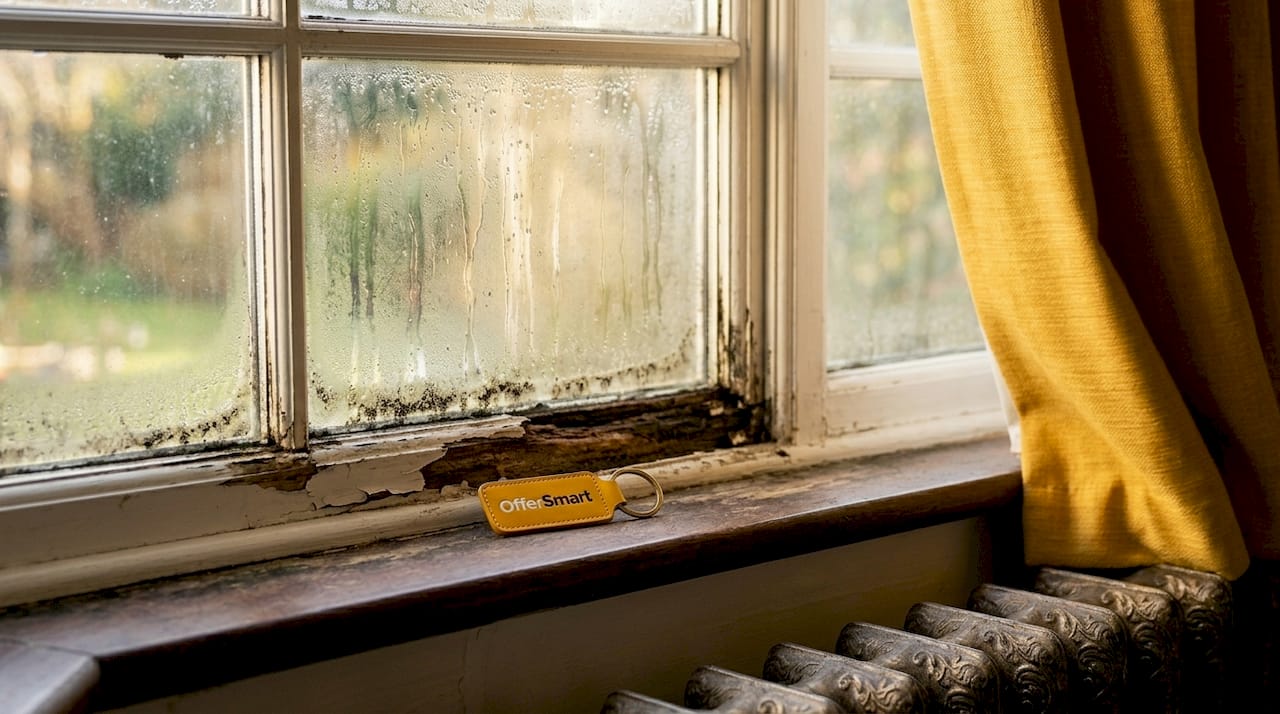
This is the single most common costly surprise for first-time buyers. Look for dark staining on walls or ceilings, bubbling or peeling paint, and tide marks near skirting boards. Sniff the air in every room, particularly bathrooms, kitchens, and any room on a ground floor or below a flat roof. Ask the seller directly whether there has been any history of damp treatment. Evasive answers are a red flag in themselves.
Windows and doors
Rotting timber frames are expensive to replace. Condensation trapped between the panes of double glazing means the sealed unit has failed and needs replacing. Check that every window and external door opens and closes smoothly. Resistance or warping can indicate structural movement in the building.
Heating and boiler
Ask to see the boiler's service history. A boiler with no records or one that is over 15 years old is a significant expense waiting to happen. Turn on radiators if possible and check that they heat evenly. Cold spots at the top of a radiator suggest air in the system; cold spots at the bottom can indicate sludge build-up.
Electrics
Locate the consumer unit (fuse box) and check its age. Modern units have individual circuit breakers and RCD protection. An old-style fuse box with rewirable fuses is a sign the wiring may need updating, which can cost several thousand pounds. Ask whether an Electrical Installation Condition Report (EICR) has been carried out recently.
Structural cracks
Not all cracks are serious, but some are. The rule of thumb: if a crack is wide enough to fit a 10p coin, it warrants further investigation. Diagonal cracks running from corners of windows or doors are more concerning than hairline vertical cracks in plaster. Note the location and direction of every crack you see.
Rightmove's buyers' viewing checklist explicitly includes checking the fuse box age, whether electrical safety checks are up to date, heating system condition, and the property's Energy Performance Certificate (EPC) rating as essential viewing steps.
| Interior issue | Key warning sign | Potential cost |
|---|---|---|
| Damp and mould | Staining, peeling paint, musty smell | £500 to £10,000+ |
| Failed double glazing | Condensation between panes | £100 to £300 per unit |
| Old boiler | No service records, age over 15 years | £2,000 to £4,500 |
| Outdated electrics | Old fuse box, no EICR | £3,000 to £6,000+ |
| Structural cracks | Wide or diagonal cracks | £1,000 to £50,000+ |
Pro Tip: Ask the estate agent to confirm in writing whether the seller is aware of any damp, structural movement, or electrical issues. Their response, or refusal to respond, tells you a great deal about what may be hiding behind fresh paint.
Understanding how these issues affect value is central to using property data intelligently when you move to the offer stage.
Exterior warning signs: roofs, walls, and drainage
Many first-time buyers focus almost entirely on the interior of a property and give the outside only a passing glance. This is a costly mistake. Exterior problems are often the most expensive to fix, and they are frequently visible to anyone who takes the time to look carefully.
Homebuyer surveys often inspect the roof from ground level and may miss issues that are not immediately obvious, which means your own eyes during the viewing are your first line of defence.
Roof
Stand back from the property and look at the roofline. It should be straight. Any sagging or dipping suggests structural weakness in the roof timbers. Check for missing, slipped, or cracked tiles. Patches of moss or lichen are not just cosmetic; they retain moisture and accelerate tile deterioration. Look at the chimney stack if there is one. Leaning or cracked chimney stacks are a safety concern as well as an expense.
Walls
Bulging or bowing walls indicate a serious structural problem. Stepped cracks running diagonally through brickwork, particularly at corners, can signal subsidence or foundation movement. Check the mortar between bricks. Crumbling or missing mortar (known as failed pointing) allows water ingress and can lead to damp inside the property.
Gutters and drainage
Blocked or broken gutters are one of the most common causes of damp in UK properties. Look for staining on the external walls below gutters, which indicates overflow. Check for plants or moss growing inside gutters, a clear sign of neglect. Downpipes should be securely fixed and discharge into a drain, not directly onto the ground.
Air bricks and ground drainage
Air bricks are small ventilation grilles at the base of external walls. Blocked air bricks cause moisture to build up under timber floors, leading to rot. Look for standing water near the property after rain, or evidence of poor drainage such as waterlogged soil or green algae on paving.
According to MDJ Mortgages, first-time buyers should specifically look for slipped tiles, sagging rooflines, cracked or leaning chimneys, large or stepped wall cracks, bulging walls, rotting window frames, standing water, blocked air bricks, and signs of poor drainage during their viewing walkthrough.
If you spot any exterior warning signs, request a full structural survey rather than a standard homebuyer report. The additional cost is small compared to the potential repair bills. Knowing what issues exist also gives you leverage when avoiding overpaying on a property that needs significant work.
For reference on how thorough exterior due diligence compares to commercial property inspection standards, the multifamily due diligence comparison offers a useful broader perspective on what rigorous property assessment looks like.
Red flag summary: comparison by cost and risk
Now that you know what to look for, it helps to see all the major red flags together, ranked by the financial risk they carry if missed. This table gives you a clear, data-driven way to prioritise your concerns and decide which issues need immediate follow-up.
Problems are systematically missed during viewings and some only become obvious after moving in, particularly damp and mould, heating issues, and certain structural problems. That is why spotting them before you make an offer is so valuable.
| Red flag | Risk if missed | Typical repair cost | Priority |
|---|---|---|---|
| Damp and mould | Structural damage, health risks | £500 to £10,000+ | Critical |
| Roof problems | Water ingress, rot, collapse risk | £5,000 to £25,000+ | Critical |
| Structural cracks | Subsidence, major rebuilding | £1,000 to £50,000+ | Critical |
| Old or unsafe electrics | Fire risk, rewiring required | £3,000 to £6,000+ | High |
| Failed boiler | Heating failure, full replacement | £2,000 to £4,500 | High |
| Drainage issues | Flooding, foundation damage | £1,000 to £15,000 | High |
| Failed double glazing | Heat loss, condensation | £100 to £300 per unit | Medium |
| Rotting window frames | Damp, security risk | £500 to £3,000 | Medium |
The critical-priority issues are the ones that can affect the structural integrity or habitability of the property. They should either be investigated by a specialist before you proceed, or factored into your offer price as a negotiating point.
Key takeaways from this summary:
- Damp, roof problems, and structural cracks carry the highest financial risk and are the most commonly missed.
- Electrical and heating issues are serious safety concerns that affect your mortgage lender's willingness to proceed.
- Drainage and glazing problems are often visible and relatively straightforward to price, making them useful negotiating points.
When you are ready to make an offer, understanding how much below asking price is reasonable given the defects you have found is a critical next step.
Why checklist discipline beats first impressions
Here is the uncomfortable truth: most buyers who end up with expensive, regret-inducing problems did not miss the signs because the signs were hidden. They missed them because they were not looking in the right way.
Gut instinct is a powerful thing. When you walk into a property that feels right, your brain starts working against you. It minimises concerns, explains away warning signs, and fills in gaps with optimism. That is not a character flaw. It is simply how human decision-making works under emotional pressure.
The buyers who consistently avoid costly mistakes are not necessarily more experienced. They are more disciplined. They use a checklist. They ask uncomfortable questions. They request documentation. They book second viewings. They treat the process as an evidence-gathering exercise, not a lifestyle audition.
Survey data and decades of agent experience confirm that slowing down and using a structured list instantly levels the playing field for first-time buyers. You do not need to be a surveyor to spot a sagging roofline, a musty smell in the bedroom, or a fuse box that belongs in a museum. You just need to be looking for those things rather than admiring the kitchen tiles.
The biggest savings in property buying come from uncovering issues before you make an offer, not after a survey. Once you are under offer, the emotional and financial pressure to proceed is enormous, even when a survey reveals problems. Catching issues at the viewing stage gives you genuine options: walk away, negotiate, or request specialist reports before committing.
Every overlooked problem has a buyer story behind it. Rigorous buyer criteria and a disciplined checklist approach are what separate buyers who move in confidently from those who spend their first year dealing with expensive surprises.
Take the next step with Offer Smart
Spotting red flags during a viewing is only part of the picture. Once you know what issues a property has, you need clear, data-driven guidance on what to offer, what the property is genuinely worth, and whether the numbers stack up.

Offer Smart gives you instant access to comparable local sales, flood risk data, crime statistics, and a full area profile so you can assess a property with confidence, not guesswork. Use the offer and mortgage calculators to test your budget against real repair costs, or get a mortgage estimate before you commit to anything. Armed with viewing notes and Offer Smart's data, you can negotiate from a position of knowledge and avoid overpaying at every step.
Frequently asked questions
What are the most common red flags missed during property viewings?
Windows and doors, damp or mould, and heating system problems are among the issues most commonly overlooked on first viewings, often only becoming apparent after moving in.
How can I check for damp or mould during a house viewing?
Look for musty smells, stained walls or ceilings, and peeling paint, and ask about ventilation and past damp issues, as Which? recommends checking for these condensation signals during UK viewings.
Should I worry if there are cracks in the walls or ceilings?
Wide or stepped cracks can indicate potential structural issues and should prompt further professional investigation, particularly large or stepped cracks and bulging walls which are key red flags for first-time buyers.
What exterior warning signs are hardest to spot without a survey?
Hidden roof issues, blocked or leaking gutters, and drainage problems are often missed, as homebuyer surveys often inspect the roof from ground level and may not catch everything.
Why use a checklist instead of just trusting gut instinct?
Checklists ensure you catch problems that are easy to overlook when rushed, and structured viewing checklists are consistently recommended by reputable sources as the most reliable way to make regret-free buying decisions.