

When you spot a home you love online, the first thing you do is copy that web address and send it to your partner, your agent, or your financial advisor. That URL, known as a property listing link, is more than just a web address. It's a gateway to pricing data, photos, neighborhood context, and contact details that shape your entire buying decision. But not all listing links are created equal, and knowing how to read, share, and verify them can be the difference between a confident offer and a costly mistake.
Table of Contents
- Understanding property listing links
- Why sharing and short links make a difference
- How property listing links empower smart research
- Common pitfalls and expert tips for using listing links
- Why savvy buyers don't rely solely on listing links
- Next steps: Smarter offers with the right tools
- Frequently asked questions
Key Takeaways
| Point | Details |
|---|---|
| Definition clarified | A property listing link is a direct URL to a real estate detail page with key information for buyers and investors. |
| Critical for research | Listing links provide essential data for assessing property value, trends, and neighborhood quality. |
| Verify before deciding | Always double-check listing details due to possible delays or inaccuracies in online property data. |
| Utilize smart tools | Supplement property research with independent calculators and local market tools for best results. |
Understanding property listing links
A property listing link is a URL that directs you to a specific real estate property's detail page on platforms like Zillow, Redfin, Realtor.com, or MLS websites, containing comprehensive details such as photos, description, price, and contact information for buyers and agents. Think of it as a digital property file that lives at a single web address.
When you land on a listing page, you typically find a structured set of information. Here's what most major platforms include:
- Photos and virtual tours: High-resolution images, 3D walkthroughs, and sometimes drone footage
- Property details: Square footage, number of bedrooms and bathrooms, lot size, and year built
- Asking price: The seller's listed price, sometimes alongside a price history showing previous reductions
- Neighborhood data: School ratings, walkability scores, and proximity to amenities
- Agent contact information: The listing agent's name, phone number, and brokerage
- Days on market: How long the property has been listed, which signals negotiating leverage
- Tax and HOA information: Annual property taxes and homeowners association fees where applicable
Different platforms structure this data slightly differently. Here's a quick comparison of what you'll find across the most popular portals:
| Platform | Listing ID format | Key unique feature | Data freshness |
|---|---|---|---|
| Zillow | 8-digit Zillow ID | Zestimate automated valuation | Updated frequently |
| Redfin | Redfin-specific listing ID | Agent-sourced MLS data | Near real-time MLS sync |
| Realtor.com | MLS number displayed | Direct NAR MLS feed | Strong MLS accuracy |
| MLS direct | MLS number | Most authoritative source | Fastest updates |
Knowing which platform you're using matters because data accuracy and update frequency vary. Redfin, for example, pulls directly from MLS feeds with minimal delay, while some aggregator sites can lag by 24 to 48 hours. That gap might not sound significant, but in a fast-moving market, a property can go under contract while its listing link still shows "active."
Pro Tip: Always check the "days on market" figure alongside the listing date. A property that's been listed for 60-plus days in a competitive area is telling you something the photos never will.
Why sharing and short links make a difference
Now that you know what these links are, let's look at why and how they are shared, especially with the rise of short, convenient links.
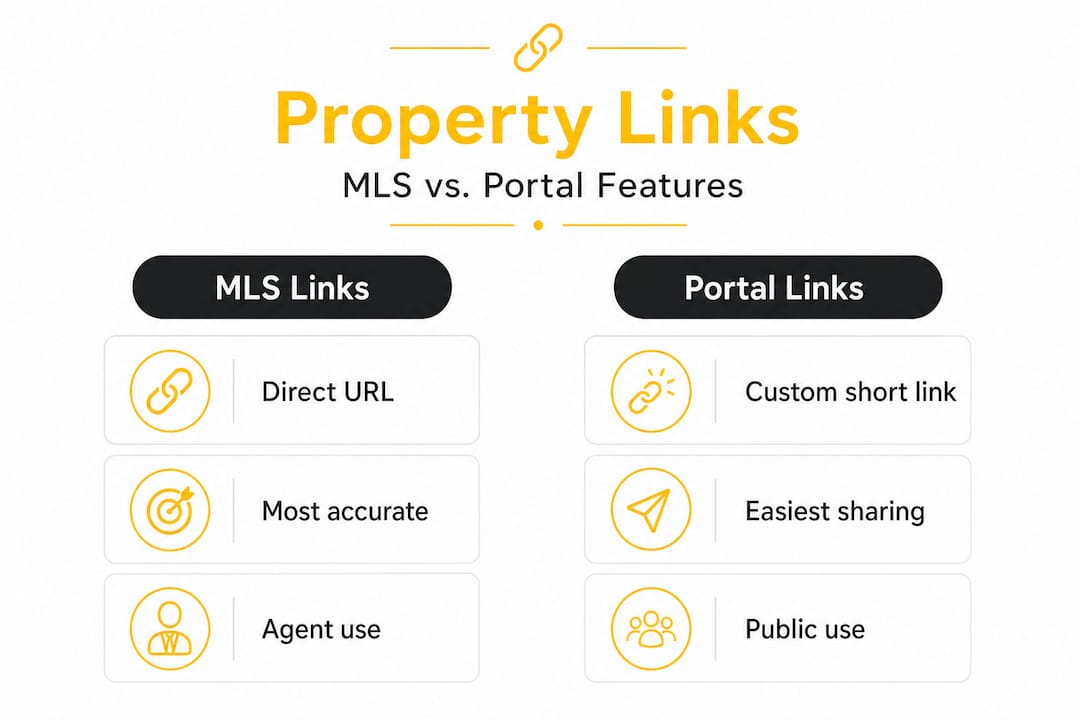
for long MLS URLs to make sharing easier via marketing materials, social media, or websites, improving accessibility for home buyers and investors. A raw MLS URL can be 150 characters long, full of tracking parameters and session tokens. That's not something you paste into a text message. Short links solve that problem.Here's a comparison of how different link types serve different audiences:
| Link type | Best used for | Risk level | Example scenario |
|---|---|---|---|
| Full MLS URL | Direct agent-to-buyer sharing | Low | Emailed from agent portal |
| Platform listing URL | General sharing and research | Low to medium | Copied from Zillow or Redfin |
| Custom short link | Social media and print marketing | Medium | Shared in Instagram bio or flyer |
| QR code link | Open houses and yard signs | Medium | Scanned at a showing |
Short links are convenient, but they carry a specific risk: the destination can change without warning. An agent might update the short link to point to a new listing after the original property sells. You could be researching one property while the link now points to a completely different one.
There's also the issue of expiration. When a listing is removed or marked as sold, the original platform URL often redirects to a "property not found" page or a generic search result. If you saved a short link weeks ago and revisit it today, you may not be looking at the same data you saw before.
Pro Tip: Before acting on any listing link someone sends you, open it fresh in your browser and confirm the address, price, and status match what you were told. Never rely on a screenshot of a listing page as your source of truth.
How property listing links empower smart research
Beyond sharing, property listing links play a pivotal role in helping buyers and investors research the true value and context of a property.

Listing links provide key data for value assessment, including price per square foot, comparable sales, and neighborhood details, but data should be verified because MLS-sourced information syndicates with potential delays or inaccuracies. That caveat is important. The data is useful, but it's a starting point, not a final answer.
Here's a practical, step-by-step approach to extracting real value from a listing link:
-
Record the price per square foot. Divide the asking price by the listed square footage. Then find two or three nearby sold properties from the same listing platform and compare. If the subject property is priced 20% above comparable sales, that's your negotiating anchor.
-
Review the price history. Most platforms show every price change since the listing went live. A property that started at $450,000 and dropped to $399,000 signals motivated seller territory. Use that information when negotiating property prices.
-
Check the listing date against comparable sales dates. If the comps shown on the listing page sold six months ago, they may not reflect current market conditions. Pull your own recent comps from a separate source.
-
Cross-reference neighborhood data. Listing platforms provide school ratings and walkability scores, but these are aggregated from third-party sources. Verify them independently, especially if schools are a priority for your family.
-
Use local data for offer decisions. Beyond the listing itself, look at what's happening on the same street and within a quarter-mile radius. Recent sales on the same road carry more weight than broader neighborhood averages.
-
Run the numbers through independent property value calculators. Don't rely solely on the platform's automated valuation model. These tools use different algorithms and can vary by tens of thousands of dollars.
"A listing link is your entry point, not your conclusion. Every figure you see on that page deserves a second source before it influences your offer."
MLS syndication, the process by which MLS data gets distributed to consumer-facing portals, introduces a layer of potential error at every step. An agent updates a price in the MLS, but that change may take hours or days to appear on Zillow or Realtor.com. In that window, buyers are making decisions based on stale data. This is not a rare edge case. It's a structural feature of how the system works.
Common pitfalls and expert tips for using listing links
While powerful, property listing links can also trip up unwary buyers. Here's how to avoid the most common mistakes.
MLS listings drive 94% of sales via syndication to portals, which means the data you see on consumer platforms is almost always MLS-derived. Verifying that data independently is essential for investment decisions. Here are the most frequent issues buyers encounter:
- Outdated status: A property shown as "active" may already be under contract. Always call the listing agent to confirm current status before investing significant research time.
- Inaccurate square footage: Square footage figures in listings are often sourced from tax records, which can be wrong. Discrepancies of 5 to 10 percent are common. An independent appraisal or floor plan measurement is the only reliable figure.
- Misleading photography: Wide-angle lenses make rooms appear larger than they are. A bedroom that looks spacious in photos may barely fit a queen bed. Visit in person before forming strong opinions about layout.
- Missing disclosures: Listing links show what agents choose to include. Known issues like foundation cracks, water damage history, or HOA disputes may not appear on the listing page at all.
- Fake listings: Fraudulent listings that copy real property photos and details but use different contact information are a growing problem. Always verify the listing agent's credentials through the brokerage's official website.
- Broken or redirected links: Short links can be reassigned. Full platform URLs can expire. Never bookmark a listing link and assume it will show the same property weeks later.
Pro Tip: Cross-reference the same property on at least two platforms. If the square footage, price, or listing date differs between platforms, that discrepancy is a red flag worth investigating before making an offer. Also review our buyer checklist before making an offer to make sure you're covering every angle.
To protect yourself from avoiding overpaying, treat every figure on a listing page as a claim that needs verification, not a fact that's been confirmed. The listing is the seller's best presentation of the property. Your job is to find out what's behind it.
Why savvy buyers don't rely solely on listing links
Here's the perspective experienced buyers don't want you to miss.
Listing links are genuinely useful. They consolidate a remarkable amount of information in one place and make property research faster than it's ever been. But there's a widespread misconception that the data on a listing page is authoritative. It isn't. It's curated.
The seller and their agent have chosen what to highlight and what to leave out. The platform's automated valuation model is a statistical estimate, not an appraisal. The neighborhood scores come from third-party aggregators with their own methodologies and update cycles. None of this makes listing links bad. It makes them incomplete.
We've seen buyers fall into a pattern where they spend hours comparing listing links across dozens of properties but never pause to verify the underlying data on their top choices. They become expert browsers but remain uninformed buyers. The volume of information available online can create a false sense of due diligence.
The smartest approach treats a listing link as the beginning of your research, not the end. Once a property catches your attention, that's when the real work starts: pulling sold comparables from authoritative sources, checking local crime and flood data, calculating realistic rental yields if you're investing, and running a proper smart property valuation before deciding what to offer.
Overreliance on listing data is one of the most consistent patterns we see among buyers who later regret their offers. They trusted the Zestimate. They accepted the listed square footage. They didn't check whether the school rating had changed since the listing was created. These aren't careless buyers. They're buyers who didn't know what they didn't know.
The solution isn't to distrust listing links. It's to use them as one layer of a broader research process. Pair the listing data with independent comparables, verified neighborhood insights, and a clear-eyed financial analysis. That combination gives you something a listing link alone never can: genuine confidence in your offer.
Next steps: Smarter offers with the right tools
You now understand what property listing links are, how they work, and where they fall short. The next step is putting that knowledge into practice with tools that go further than any listing page.
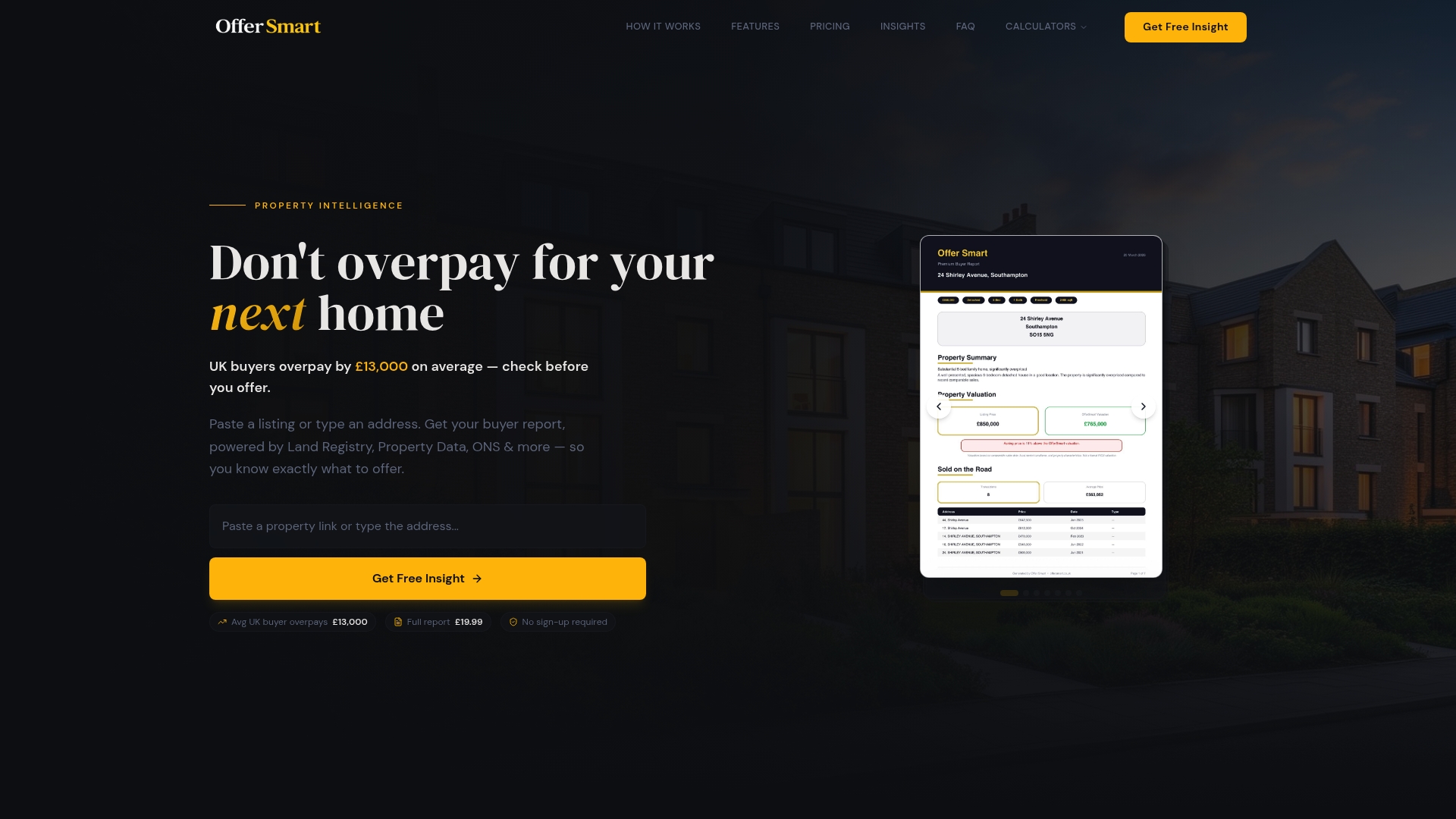
Offer Smart is built for exactly this moment. Paste any listing link or enter a property address, and Offer Smart instantly analyzes the home and its surrounding area, comparing recent local sales including properties on the same road, to tell you what you should realistically offer. It goes beyond price to cover crime risk, flood risk, school proximity, lifestyle factors, and for investors, rental yield and estimated ROI. Use the property calculators to model your full financial picture, including the mortgage estimate tool, so you walk into every negotiation with data, not guesswork. Listing links start the conversation. Offer Smart finishes it.
Frequently asked questions
Can property listing links expire or become inactive?
Yes, property listing links can expire or become inactive if the property is sold or the listing is removed from the platform. Custom short links can also be reassigned to different properties, so always verify the link is pointing to the correct, current listing before acting on it.
Is the data in a listing link always up-to-date and accurate?
Not always. MLS syndication delays can mean that price changes, status updates, and other details lag behind the actual MLS record by hours or even days, so it's wise to verify critical details with the listing agent before acting.
How do I share a property listing link safely with others?
Use official platform tools or verified short links from trusted agents, and always confirm the link directs to the authentic property page to avoid fraudulent listings that copy real property details with fake contact information.
What should I do if a listing link doesn't match public property records?
Contact the listing agent directly and cross-check with official property records to resolve discrepancies. Listing data inaccuracies often stem from MLS syndication errors or outdated tax records, and the listing agent is your fastest route to clarification.