

Exchanging contracts is the point at which your property purchase becomes legally binding in England and Wales. Every question you fail to ask before that moment becomes a risk you carry alone. The TA6 Property Information Form, your mortgage offer, and your buildings insurance must all be in order before your solicitor can proceed. This guide covers the critical questions before exchanging contracts that protect your legal position, your finances, and your move-in experience.
1. Key legal questions to verify title and documents
Your solicitor's primary job before exchange is to confirm that the title to the property is clean, complete, and free from undisclosed risks. Ask your solicitor directly: has the Land Registry title been reviewed, and are there any restrictions on what you can do with the property? Restrictive covenants, for example, can prevent you from extending, running a business from home, or even keeping certain animals on the premises.

The TA6 Property Information Form contains key disclosures about disputes, alterations, and boundary issues, and its answers directly affect your contract risk. If the seller has disclosed a neighbour dispute or an unapproved extension, your solicitor must address this before exchange. Unresolved disclosures do not disappear after you sign. They transfer to you.
For leasehold properties, the questions multiply. Ask specifically about the current service charge, the ground rent, and whether any major works are planned that could trigger a large bill in the next two to five years. Leasehold enquiries should probe future financial exposure beyond the headline fees, including planned major works and rising service charges. A service charge of £1,200 per year today can become £4,000 if the building needs a new roof.
- Has the Land Registry title been reviewed and approved?
- Are there any restrictive covenants, easements, or rights of way?
- Have all planning permissions and building regulations certificates been obtained for any alterations?
- Are there any outstanding disputes disclosed in the TA6 or TA10 forms?
- For leasehold: what are the service charge, ground rent, and any planned major works?
Pro Tip: Ask your solicitor for a written summary of any risks that remain unresolved and how each one is being mitigated, whether through indemnity insurance, a price reduction, or a seller's undertaking.
2. Property condition: survey and environmental questions
A lender's mortgage valuation is not a survey. It tells the lender whether the property is worth the loan. It tells you almost nothing about the building's condition. A full structural survey identifies issues the lender's valuation ignores, and buyers must confirm whether defects have been negotiated or accepted before exchange to prevent post-completion costs.
Ask your solicitor and surveyor the following before you proceed:
- What defects did the survey identify, and have any been renegotiated with the seller?
- Have the local authority, drainage, and environmental searches been returned and reviewed?
- Do the search results show any flood risk, contamination, or planned road or infrastructure changes nearby?
- Are there any planning notices, enforcement notices, or Article 4 directions affecting the property?
- Has the seller carried out any alterations without building regulations approval, and if so, how is this being resolved?
Search results carry real weight. A flood risk flag from the Environment Agency, for instance, can affect your insurance premiums for the life of your ownership. Contaminated land entries can affect resale value and mortgage availability. These are not abstract concerns. They are financial facts you need before exchange, not after.
Your solicitor should produce a Report on Title before exchange. This document summarises all legal findings, outstanding risks, and how each is being addressed. If you have not received this report, ask for it immediately. It is the single most important document you will read before signing.
3. Financial and mortgage readiness before exchange
Exchange of contracts locks in legal commitment, with the deposit typically set at 5 to 10% of the purchase price and the completion date agreed and recorded. If you pull out after exchange without a valid legal reason, you forfeit that deposit. This makes financial readiness non-negotiable.
| Question | What to confirm |
|---|---|
| Is the deposit cleared? | Funds must be in your solicitor's client account before exchange, not in transit |
| Is the mortgage offer valid? | Check the expiry date and confirm all conditions have been satisfied |
| Is buildings insurance arranged? | Cover must start from exchange date, not completion, as required by most lenders |
| Are there any outstanding mortgage conditions? | Conditions such as a satisfactory valuation or proof of income must be met |
| Is the chain financially ready? | Confirm all parties in the chain have cleared funds and valid offers |
Financial readiness before exchange means your mortgage offer is valid, your deposit is cleared in your solicitor's client account, and your buildings insurance is arranged to start at exchange date. Missing any one of these three can delay or collapse the exchange entirely.
Mortgage offers typically have a validity period of three to six months. If your purchase has taken longer than expected, check the expiry date with your lender. An expired offer means you must reapply, which takes time and may result in a different rate.
Pro Tip: Buildings insurance must start on the day of exchange, not completion. From exchange, you are legally committed to buy. If the property burns down between exchange and completion, you are still obliged to complete. Without insurance in place, that loss is yours.
4. Contractual terms and completion date questions
The contract of sale sets out what happens if either party fails to complete. Before you exchange, you must understand these terms. Ask your solicitor to walk you through the default provisions, not just the completion date.
- What is the agreed completion date, and has every party in the chain confirmed it?
- What notice period applies if the completion date needs to change?
- What are the financial penalties if you or the seller fail to complete on time?
- For new builds: is this an exchange-on-notice contract, and what is the long-stop date?
- Are there any special conditions in the contract that must be satisfied before completion?
Exchange-on-notice contracts for new builds allow exchange before the exact completion date is confirmed, with an agreed notice period protecting both buyer and developer. This is standard practice for new build purchases, but it means your completion date is not fixed at exchange. You need to know the long-stop date, which is the latest date by which the developer must complete, or you can withdraw.
Contractual default consequences such as deposit forfeiture and notice requirements are critical for buyer risk management. If the seller defaults, you may be entitled to rescind the contract and recover your deposit plus interest. If you default, you lose your deposit and may face further legal action. These are not theoretical scenarios. They happen in chains where one party's circumstances change after exchange.
Completion date coordination in a chain also requires alignment with your mortgage advance and funds transfer timings. Your lender needs advance notice to release funds. Misalignment between the chain's agreed completion date and your lender's processing time can block a smooth completion, even when everyone wants to proceed.
5. Practical questions about utilities, keys, and move logistics
Not every important question before exchange is a legal one. Several practical matters, if left unconfirmed, create unnecessary stress on moving day and beyond.
- Where are the gas and electricity meters, and who are the current utility providers?
- Where is the main stopcock for the water supply?
- What day is bin collection, and are there any recycling or waste restrictions?
- Are all fixtures and fittings listed in the TA10 Fittings and Contents Form accurately reflected in the contract?
- What is the arrangement for key handover on completion day, and will the seller vacate by a specific time?
The TA10 form is where disputes about what stays and what goes are most common. If the seller agreed verbally to leave the integrated dishwasher or the garden shed, that agreement is only enforceable if it appears in the TA10 and is reflected in the contract. Verify all agreed fixtures and contents correspond with the contract forms before exchange, not on moving day.
Meter readings at completion protect you from inheriting the seller's unpaid energy debt. Confirm with your solicitor that the seller will provide readings on the day of completion. If the property has a prepayment meter, check the credit balance. These are small details with real financial consequences.
Key takeaways
Resolving every legal, financial, and practical question before exchanging contracts is the only way to commit to a purchase without carrying avoidable risk.
| Point | Details |
|---|---|
| Legal due diligence first | Confirm title, TA6 disclosures, covenants, and leasehold charges are resolved before exchange. |
| Survey findings must be addressed | Negotiate defects or accept them knowingly. Never exchange with unresolved structural concerns. |
| Financial readiness is non-negotiable | Deposit cleared, mortgage offer valid, and buildings insurance active from exchange date. |
| Understand default provisions | Know exactly what happens financially if either party fails to complete after exchange. |
| Confirm practical details in writing | Fixtures, key handover, and meter readings should be confirmed in the contract, not by word of mouth. |
Why these questions matter more than most buyers realise
The buyers I see struggle most after exchange are not the ones who skipped the survey. They are the ones who assumed their solicitor had covered everything without ever asking a direct question. Conveyancing is a process with many moving parts, and solicitors are managing multiple files simultaneously. Your file gets attention when you ask for it.
The enquiry phase is described by Setfords as the engine room of conveyancing, and that description is accurate. Every unresolved enquiry at exchange becomes a liability you absorb. I have seen buyers exchange with outstanding planning enforcement notices, undisclosed boundary disputes, and mortgage conditions that were never formally discharged. In each case, the buyer assumed their solicitor had it handled.
My honest advice: treat your solicitor as a trusted expert, but ask the questions anyway. Request a pre-exchange call to go through the contract exchange checklist item by item. Ask which risks remain open and what the mitigation is. If you are buying leasehold, ask about the next five years of service charge exposure, not just the current year. And use tools like Offersmart's homebuying timeline guide to understand where you are in the process and what should be resolved at each stage.
The buyers who exchange with confidence are the ones who asked the uncomfortable questions before signing, not the ones who hoped for the best.
— Rhys
Check your financial readiness with Offersmart
Before you exchange, your financial picture needs to be clear. Offersmart gives you the tools to confirm your numbers before you commit. Use the mortgage calculator to check your affordability, model different deposit scenarios, and understand your monthly costs before exchange day arrives.
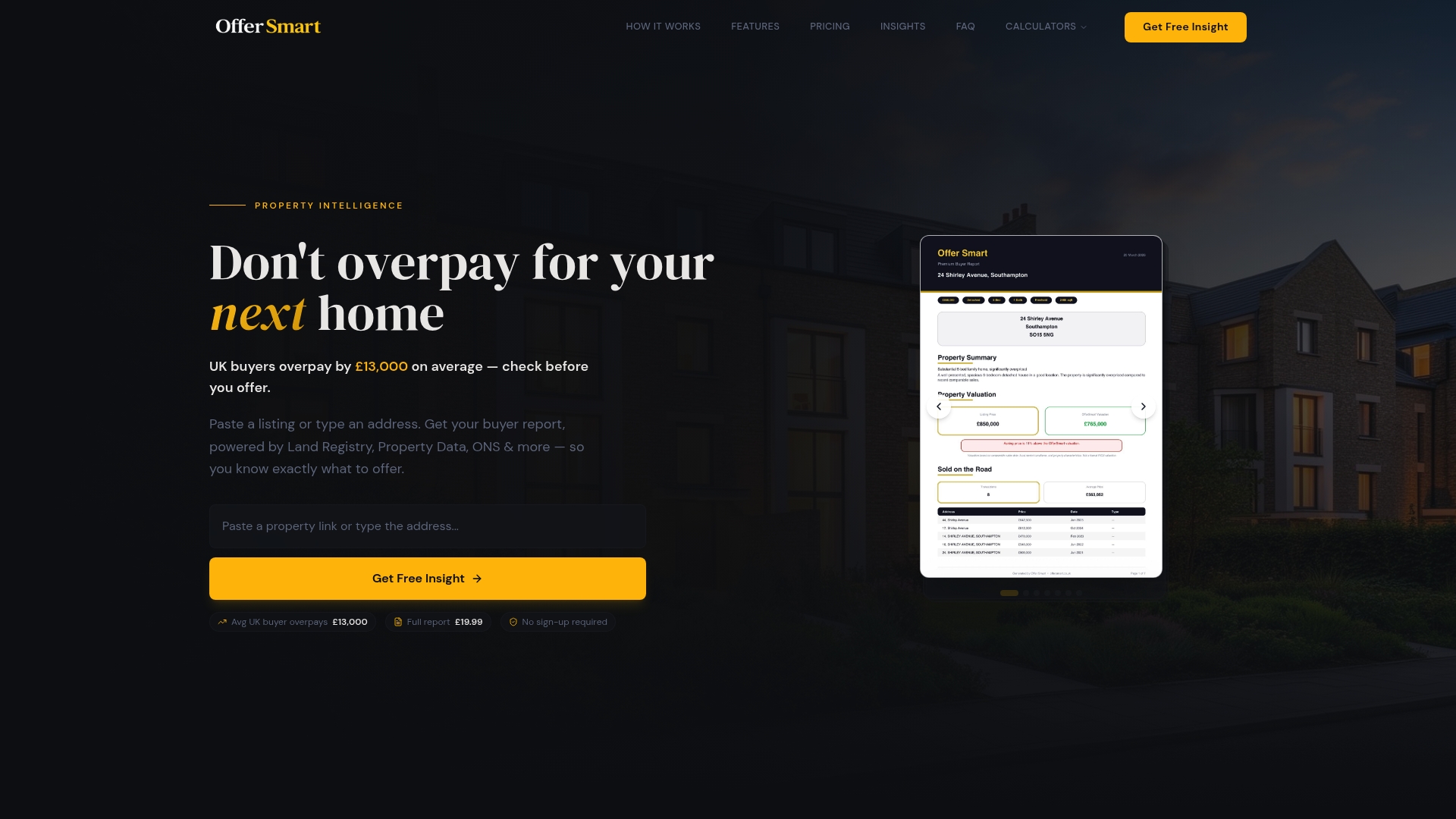
Offersmart also provides a full suite of property calculators covering running costs, stamp duty, and estimated fees, so you can see the complete financial picture in one place. Pair that with the UK property purchase checklist to confirm every stage is complete before your solicitor calls to exchange. No guesswork. No last-minute surprises.
FAQ
What happens if I have not received my mortgage offer before exchange?
You cannot safely exchange contracts without a valid mortgage offer in place. Exchange commits you legally to purchase, and if your mortgage falls through afterwards, you risk losing your deposit.
How much deposit do I need at exchange?
The deposit at exchange is typically 5 to 10% of the purchase price and must be cleared in your solicitor's client account before exchange can take place.
What is the TA6 form and why does it matter?
The TA6 Property Information Form is a seller's disclosure document covering disputes, alterations, and boundary issues. Its answers form part of the contract, so unresolved concerns in the TA6 transfer directly to the buyer after exchange.
Do I need buildings insurance before exchange or completion?
Buildings insurance must be arranged to start from the exchange date, not completion. From exchange, you are legally obligated to complete the purchase, so the financial risk of damage to the property passes to you.
Can I still negotiate on price after the survey before exchange?
Yes. If your survey identifies significant defects, you can renegotiate the price or request repairs before exchange. Once contracts are exchanged, that opportunity is gone and the agreed price stands.