

Conveyancing is the legal process of transferring property ownership from one person to another, and every residential sale or purchase in the UK requires it. Whether you are buying your first flat in Bristol or selling a family home in Leeds, the conveyancing process is the mechanism that makes the transaction legally binding and financially safe. A qualified solicitor or licensed conveyancer manages this on your behalf, handling everything from title checks to contract exchange. The process typically runs for 8 to 12 weeks from offer acceptance to completion, though leasehold properties and complex chains can extend that considerably. Key documents like the TA6, TA10, and LPE1 management pack form the backbone of what gets reviewed.
What is the conveyancing process, step by step?
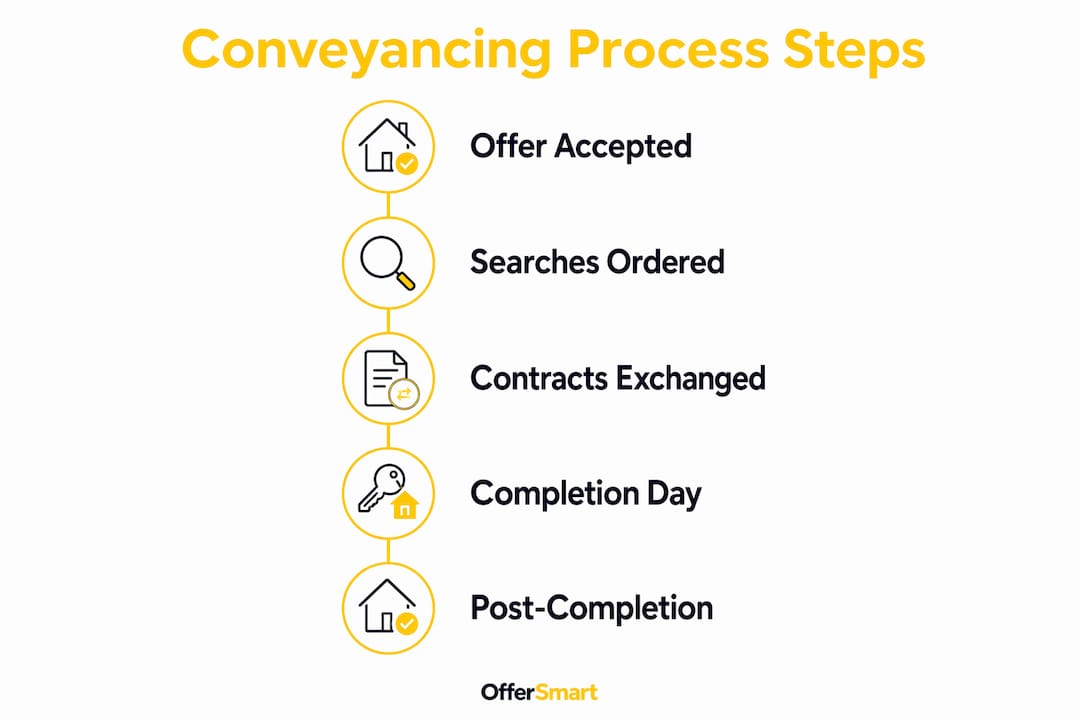
The conveyancing legal process follows a defined sequence of stages, each building on the last. Understanding where you are in that sequence removes a great deal of anxiety from what is otherwise an opaque experience.
-
Instructing your conveyancer. Once an offer is accepted, both buyer and seller appoint their own solicitor or licensed conveyancer. You do not share one. Each party's representative acts solely in their client's interest.
-
Drafting and reviewing the contract pack. The seller's solicitor prepares a contract pack containing the draft contract, official title documents from HM Land Registry, and completed property information forms. The TA6 and TA10 forms are central here. The TA6 covers disputes, planning permissions, and boundaries; the TA10 lists what fixtures and fittings stay with the property.
-
Ordering property searches. Your solicitor orders a set of official searches. Local authority searches cover planning permissions, building regulations, and whether the property sits in a conservation or flood risk area. Environmental and drainage searches reveal risks that could affect the property's value or your safety.
-
Raising and resolving legal enquiries. After reviewing the contract pack and search results, your solicitor raises formal written enquiries with the seller's solicitor. This stage is where hidden issues surface, from boundary disputes to missing building regulation certificates.
-
Reviewing the mortgage offer. If you are buying with a mortgage, your lender will issue a formal mortgage offer once their valuation is complete. Your solicitor reviews the offer conditions and reports to you on any requirements.
-
Exchange of contracts. Both solicitors sign and exchange identical contracts simultaneously. At this point, the buyer pays a 10% deposit and both parties are legally committed to the agreed completion date. Withdrawing after exchange means losing that deposit.
-
Completion. The remaining purchase funds transfer from your solicitor to the seller's solicitor. Keys are released, and ownership passes to you. Your solicitor then handles the post-completion formalities.
Pro Tip: Instruct your conveyancer the same day your offer is accepted. Solicitors who are instructed early can order searches and prepare paperwork in parallel, shaving weeks off the overall timeline.
How long does conveyancing take, and what causes delays?

The overall conveyancing timeline sits at 8 to 12 weeks for a standard freehold transaction. Leasehold properties routinely take longer because of the additional documentation involved. That headline figure, however, masks where time actually gets lost.
The most common sources of delay include:
- Local authority search turnaround. Some councils take up to 8 weeks to return results, particularly in busy urban areas. This single bottleneck can hold up the entire process.
- The enquiry stage. Solicitors on both sides exchange written questions and answers, and slow responses from sellers or their representatives can stall progress for weeks.
- Mortgage processing. Lenders vary significantly in how quickly they issue formal mortgage offers. A change in your financial circumstances during this period can restart the clock entirely.
- Leasehold complications. For leasehold buyers, the LPE1 management pack must be obtained from the freeholder or managing agent, who may be slow to respond. Leases under 80 years are a significant red flag, as they can require costly extensions and complicate mortgage lending.
- Chain-related hold-ups. If you are part of a property chain, delays at any point in that chain affect everyone below and above you.
The enquiry stage is often the most frustrating part of the process for buyers and sellers alike, but it is also the most protective. Every question raised is designed to surface a legal or financial liability before you are committed. Treating it as due diligence rather than an obstacle changes your perspective considerably.
For a clearer picture of the full homebuying process timeline, including what to expect at each stage, it helps to map the conveyancing steps against your broader purchase plan.
What legal documents matter most in conveyancing?
Several standard forms and documents define the conveyancing process, and knowing what each one does helps you engage more confidently with your solicitor.
| Document | Purpose |
|---|---|
| TA6 Property Information Form | Completed by the seller; covers disputes, planning history, boundaries, and services |
| TA10 Fixtures and Fittings Form | Lists what is included in the sale and what the seller is taking |
| LPE1 Leasehold Management Pack | Required for leasehold properties; details service charges, ground rent, and lease length |
| Official title register and title plan | Issued by HM Land Registry; confirms legal ownership and property boundaries |
| TR1 Transfer Deed | The legal document that formally transfers ownership on completion |
| Mortgage offer and deed | Issued by your lender; sets out the terms under which they will lend |
The LPE1 pack deserves particular attention. Leases under 80 years require careful review and can trigger renegotiation or costly lease extension proceedings. Checking the lease length early in the process is one of the most practical things a leasehold buyer can do.
Pro Tip: Ask your solicitor to flag the lease length and current service charge figures from the LPE1 pack as soon as it arrives. These two figures alone can determine whether the purchase remains financially viable.
Should you use a solicitor or a licensed conveyancer?
Both solicitors and licensed conveyancers are qualified to handle residential property transactions, but they differ in scope and regulation.
Solicitors are regulated by the Solicitors Regulation Authority and handle a broader range of legal matters beyond property. Licensed conveyancers specialise exclusively in property law and are regulated by the Council for Licensed Conveyancers. For a standard freehold purchase, either is appropriate. For transactions involving probate, leases under 80 years, or complex legal disputes, a solicitor is the stronger choice.
The case against DIY conveyancing is straightforward:
- DIY conveyancing carries personal liability if legal errors arise later, with no professional indemnity insurance to cover losses.
- Mortgage lenders require a qualified professional to act on their behalf. You cannot represent both yourself and your lender.
- Title defects, restrictive covenants, and missing planning consents require legal expertise to identify and resolve. An untrained eye will miss them.
- Professional conveyancers offer protection through indemnity insurance that DIY simply cannot replicate.
Choosing an experienced conveyancer with a proven track record in your property type, freehold, leasehold, or new build, is one of the most consequential decisions you make in the buying process. Do not select solely on price.
For a broader view of what to prepare before instructing a conveyancer, the UK property purchase checklist is a practical starting point.
What happens after completion?
Completion is not the end of the conveyancing process. Several post-completion obligations must be fulfilled to make your ownership legally watertight.
- Stamp Duty Land Tax (SDLT). Your solicitor must file the SDLT return within 14 days of completion and pay any tax owed. Missing this deadline triggers automatic penalties from HMRC.
- Registration with HM Land Registry. Your solicitor submits an application to register you as the new legal owner. This can take several weeks, and until it is complete, the title is not formally in your name.
- Notifying your mortgage lender. Once registration is confirmed, your solicitor notifies the lender. This closes the conveyancing file and confirms the legal transfer is official.
- Leasehold post-completion tasks. If you have purchased a leasehold property, your solicitor may need to serve notice on the freeholder or managing agent confirming the change of ownership, as required by the lease terms.
These steps are handled by your solicitor, but you should confirm they have been completed. Request written confirmation of SDLT filing and Land Registry registration as a matter of course.
Key takeaways
Conveyancing is a structured legal process with defined stages, and understanding each one gives you the confidence to move through a property transaction without unnecessary surprises.
| Point | Details |
|---|---|
| Conveyancing timeline | Standard freehold transactions take 8 to 12 weeks; leasehold cases take longer. |
| Exchange is the commitment point | Paying the 10% deposit at exchange legally binds both parties to proceed. |
| Searches protect your investment | Local authority, environmental, and drainage searches reveal risks before you commit. |
| Document review is non-negotiable | TA6, TA10, and LPE1 forms contain the detail that determines whether a purchase is sound. |
| Professional representation is mandatory | DIY conveyancing is uninsured and incompatible with mortgage lending requirements. |
What I have learned from watching buyers rush this process
The enquiry stage is where I see buyers lose patience most often, and it is precisely the wrong place to do so. Every question your solicitor raises exists because something in the paperwork was unclear or potentially problematic. A seller who takes three weeks to confirm they have planning permission for a rear extension is telling you something. A management company that delays the LPE1 pack for six weeks may be disorganised, which matters if you are about to pay service charges to them for the next 20 years.
The buyers who navigate conveyancing most effectively are the ones who treat it as an information-gathering exercise rather than a waiting game. They ask their solicitor for weekly updates. They read the search results rather than filing them. They check the lease length before falling in love with a flat. These are not complicated habits, but they are uncommon ones.
My honest view on DIY conveyancing is that it is a false economy in almost every case. The saving on professional fees is real. The exposure to uninsured legal liability is also real, and it can surface years after completion when you come to sell and a title defect emerges. The cost of resolving that defect will dwarf whatever you saved.
Choose your conveyancer based on their experience with your property type, their communication record, and their ability to order searches promptly. Price matters, but it should be the last filter you apply, not the first.
— Rhys
Plan your purchase costs before you instruct a conveyancer
Conveyancing fees, Stamp Duty Land Tax, and search costs all land at different points in the buying process, and being unprepared for any of them creates pressure at exactly the wrong moment.

Offersmart's mortgage calculator gives you a clear picture of your monthly repayments and total purchase costs before you commit to anything. Enter a property address and Offersmart analyses comparable local sales, estimated running costs, and a 5-year value forecast, so you arrive at the conveyancing stage knowing exactly what you can afford. Use it alongside your solicitor's advice to make decisions with full financial clarity. Visit Offersmart to get started.
FAQ
What does conveyancing mean in simple terms?
Conveyancing is the legal process of transferring property ownership from seller to buyer. It covers everything from reviewing title documents and ordering searches to exchanging contracts and registering the new owner with HM Land Registry.
How long does the conveyancing process take in the UK?
A standard freehold transaction takes 8 to 12 weeks from offer acceptance to completion. Leasehold properties and complex chains regularly take longer, particularly when local authority searches or LPE1 management packs are delayed.
What is the difference between exchange and completion?
Exchange of contracts is the point at which both parties become legally committed and the buyer pays a 10% deposit. Completion is when the remaining funds transfer and ownership physically changes hands, usually 1 to 4 weeks after exchange.
Can I do my own conveyancing without a solicitor?
DIY conveyancing is technically possible but carries significant personal liability if errors arise, and mortgage lenders require a qualified professional to act on their behalf. Professional conveyancers carry indemnity insurance that DIY cannot replicate.
What searches are carried out during conveyancing?
Your solicitor orders local authority searches covering planning permissions and flood risk, plus environmental and water or drainage searches. These reveal risks that could affect the property's value, safety, or insurability before you are legally committed to the purchase.