

Flood zone designation is one of the most significant factors determining whether a mortgage is approved, at what rate, and under what conditions. In the UK, properties in high-risk flood areas can trigger mandatory flood insurance requirements, stricter lending criteria, and higher interest rates. Understanding how flood zone affects mortgage decisions is not optional knowledge for buyers. It is the difference between a smooth purchase and a costly surprise at completion.
What are flood zones and how do they relate to mortgage lending?
Flood zones are geographic areas classified by their level of flood risk, and mortgage lenders use these classifications directly in their underwriting decisions. In the UK, the Environment Agency publishes flood risk maps that identify areas at high, medium, and low probability of flooding. Lenders cross-reference these maps when assessing a property's risk profile.

The classification system matters because it determines what a lender will require from you before approving a loan. Internationally, flood zones labelled 'A' and 'V' designate Special Flood Hazard Areas with at least a 1% annual flood risk, triggering mandatory flood insurance for federally backed mortgages. In the UK context, the equivalent high-risk designations carry similar weight with regulated lenders.
| Flood risk level | Annual flood probability | Typical lender response |
|---|---|---|
| High risk | Greater than 1% | Mandatory flood insurance, stricter terms |
| Medium risk | 0.1%–1% | Insurance often required, closer scrutiny |
| Low risk | Less than 0.1% | Insurance may still be required at lender discretion |
| Very low risk (Zone X equivalent) | Negligible | Insurance rarely mandated, standard terms |
Key points buyers need to understand about flood zone classifications:
- A property's flood zone status is checked at the point of mortgage application, not just at survey.
- Properties in lower-risk zones are not automatically exempt. Lenders may still require flood insurance based on a detailed property-specific hazard determination, even when the general flood map suggests low risk.
- Flood zone boundaries can change. A remapping exercise can move a property into a higher-risk category, altering your mortgage terms mid-ownership.
- The Environment Agency's flood risk maps are publicly accessible and should be your first check before making an offer.
Pro Tip: Check the Environment Agency's flood map for planning before viewing a property. A five-minute search can tell you whether you are looking at a high-risk address before you invest time or money.
How do flood zones affect mortgage eligibility and lending terms?
Flood risk directly influences whether a lender approves your mortgage and on what terms. Lenders now use climate risk data and flood vulnerability scores as standard inputs in their underwriting processes. This is no longer a niche consideration reserved for coastal properties.
The practical effects on lending terms are measurable. High Climate Risk Score properties may face interest rate markups exceeding 1.25% and larger down payment demands of around 25%, compared to the standard 20% for lower-risk properties. That difference in deposit requirement can add tens of thousands of pounds to the upfront cost of buying a home.
Here is how flood zone status typically affects your mortgage at each stage:
- Pre-approval assessment. Lenders run flood risk checks as part of standard affordability and risk scoring. A high-risk result triggers additional scrutiny before any offer is made.
- Interest rate pricing. Properties in high-risk flood zones attract a Climate Risk Premium. Interest rate increases of 0.5%–1.8% are applied on top of the standard rate, raising your monthly repayment for the full mortgage term.
- Deposit requirements. Lenders may require a larger deposit for flood-risk properties to reduce their exposure. A 25% deposit versus 20% on a £300,000 property means finding an extra £15,000 upfront.
- Loan term restrictions. Some lenders shorten the maximum mortgage term for high-risk properties, which increases monthly payments further.
- Outright decline. Automated underwriting systems incorporating climate risk data can deny a loan even for borrowers with excellent credit scores. Flood risk can override financial creditworthiness entirely.
Understanding your mortgage approval criteria before applying to a specific lender saves time and protects your credit file from unnecessary hard searches.
Pro Tip: Not all lenders apply the same flood risk weighting. Specialist lenders and building societies with local knowledge sometimes offer better terms for flood-zone properties than high-street banks. Always compare at least three lenders before accepting a decline or a punishing rate.
What are the flood insurance requirements tied to mortgages in flood zones?
Flood insurance and standard home insurance are not the same product. Standard buildings insurance policies in the UK typically exclude flood damage unless it is specifically added. Lenders know this, and for properties in designated high-risk zones, they require a separate, qualifying flood insurance policy as a condition of the mortgage.
The key obligations buyers face are:
- Mandatory coverage for the mortgage term. Regulated lenders require borrowers to maintain flood insurance for the entire duration of the mortgage, not just at completion. This is an ongoing annual commitment.
- Coverage minimums. Flood insurance policies must meet or exceed the standards set by the lender for coverage levels and deductibles. A cheap policy that falls below the required threshold will not be accepted.
- Lapse consequences. If you allow your flood insurance to lapse, your lender has the right to purchase force-placed insurance on your behalf. Force-placed insurance costs 2–5 times the premium of a standard policy and protects only the lender's financial interest, not your belongings or equity.
Buyers often underestimate that flood insurance requirements continue annually for the mortgage's life, not just until closing. Failure to maintain coverage can lead to financial penalties or default under lender covenants.
The financial impact of flood insurance on monthly costs is real. In comparable markets, annual flood insurance premiums vary considerably by risk level, with high-risk properties attracting the steepest costs. Factor this into your affordability calculation before you make an offer, not after. Failing to do so means overpaying on a house in a way that compounds every year.
How is climate risk reshaping mortgage lending beyond traditional flood zones?
Climate Risk Scores (CRS) and Climate Risk Premiums (CRP) are now embedded in how lenders price and approve mortgages across the UK. These scores go beyond simple flood zone maps. They assess long-term environmental vulnerability, including sea level projections, surface water drainage capacity, and historical flood frequency.
The CRS runs on a scale of 1 to 10. A higher score signals greater long-term climate exposure. Lenders use these scores to adjust mortgage terms automatically through secondary market underwriting systems. The result is that a property with a high CRS can face worse lending conditions than its current flood zone classification alone would suggest.
| Climate Risk Score | Likely mortgage impact |
|---|---|
| 1–3 (low) | Standard rates and terms |
| 4–6 (moderate) | Minor rate premium, possible insurance requirement |
| 7–8 (high) | Rate markup of 0.5%–1.25%, larger deposit required |
| 9–10 (very high) | Rate markup exceeding 1.25%, possible loan denial |
The shift towards CRS-based underwriting has significant implications for buyers in areas not traditionally considered flood zones. A property on a floodplain edge, or in an area with ageing drainage infrastructure, may score higher than expected. That score then feeds directly into the mortgage offer you receive.
Pro Tip: Ask your surveyor or conveyancer to obtain a full climate risk assessment, not just a standard flood search. The additional cost is modest, and the information can change your negotiating position significantly.
Buyers can reduce their CRS and the associated mortgage costs through mitigation investments. Physical elevation and flood defence improvements may lower the interest rate premium a lender applies. Fitting flood barriers, improving drainage, and raising electrical installations above floor level are all measures that lenders and insurers recognise.
How can buyers and investors navigate mortgages in flood zones effectively?
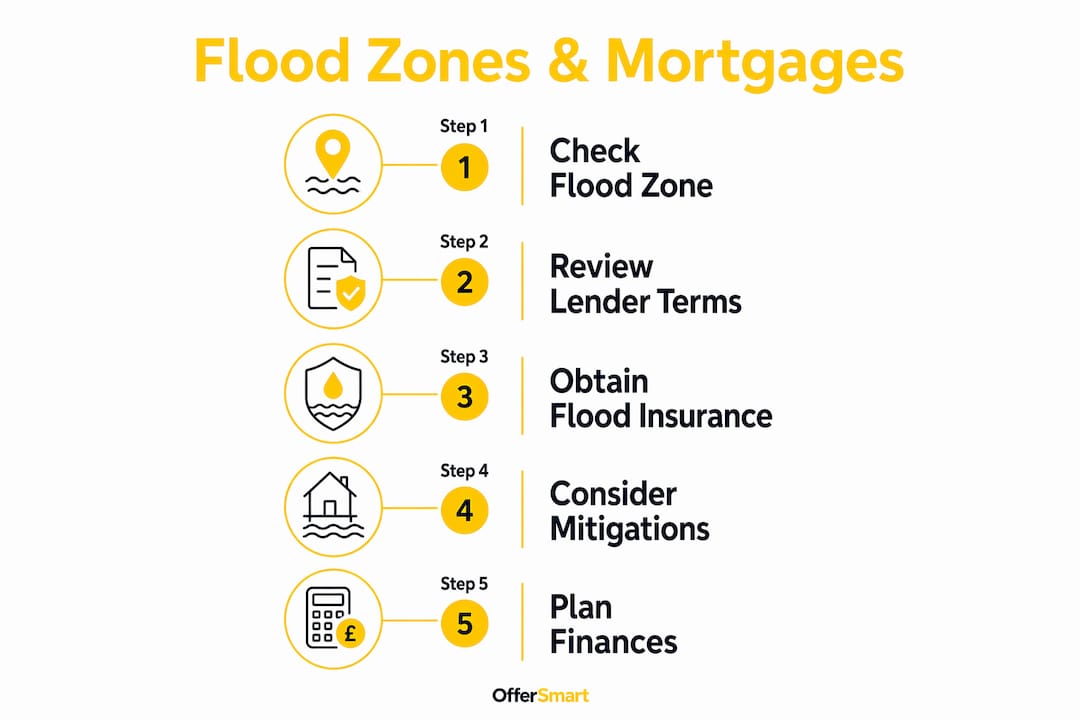
Preparation is the most effective tool for managing flood zone mortgage impact. Buyers who research flood risk before making an offer are in a far stronger position than those who discover it during the conveyancing process.
- Obtain a flood hazard determination early. Commission a formal flood risk assessment before you make an offer. This gives you accurate data to present to lenders and insurers, and it may reveal that the risk is lower than the general flood map suggests.
- Factor insurance premiums into your affordability calculation. Add the estimated annual flood insurance cost to your monthly mortgage payment before deciding what you can afford. Properties in high-risk zones may be priced lower, but the insurance and mortgage premium costs can erode that saving quickly.
- Choose a lender with flood risk expertise. Not all lenders treat flood risk identically. Specialist mortgage brokers with experience in flood-zone properties can identify lenders whose policies are more favourable for your specific situation.
- Assess long-term liquidity risk. A property that is difficult to insure today may become harder to sell or remortgage in the future as lender policies tighten. Factor this into your investment horizon, particularly if you are buying as an investor.
- Invest in resilience measures before applying. Documented flood mitigation work can improve your CRS and reduce the Climate Risk Premium a lender applies. Get quotes and evidence of planned works before your mortgage application.
Reviewing your home buying decision factors as a complete list, including flood risk, insurance, and long-term costs, gives you a clearer picture of true affordability before you commit.
Key takeaways
Flood zone status affects mortgage approval, interest rates, deposit requirements, and insurance obligations throughout the entire life of a loan.
| Point | Details |
|---|---|
| Flood zones trigger mandatory insurance | Regulated lenders require flood insurance for high-risk properties for the full mortgage term. |
| Interest rates rise with flood risk | Climate Risk Premiums can add 0.5%–1.25% or more to your mortgage rate on high-risk properties. |
| Force-placed insurance is costly | Allowing your flood policy to lapse leads to lender-imposed cover costing 2–5 times the standard premium. |
| Climate Risk Scores now drive underwriting | Automated systems can deny mortgages based on CRS even for borrowers with strong credit histories. |
| Mitigation reduces costs | Flood defence investments can lower your CRS and improve the mortgage terms a lender offers. |
Flood zones, mortgages, and what I have actually seen
Rhys here. After years of watching buyers navigate the UK property market, the single most consistent mistake I see is treating flood risk as a survey issue rather than a mortgage issue. By the time a surveyor flags it, you are already emotionally committed to the property and the lender has already run their risk assessment.
The buyers who handle this well do one thing differently. They check flood risk before they view the property, not after they make an offer. That simple shift changes the entire dynamic. You walk into a negotiation knowing the insurance cost, the likely rate premium, and whether the lender you have chosen will even touch the property.
I have also seen buyers genuinely benefit from flood-zone properties. A well-priced home in a medium-risk area, with documented mitigation work and a specialist lender, can represent real value. The key is that the buyer went in with clear numbers, not assumptions.
The evolving use of Climate Risk Scores concerns me more than traditional flood maps. A property that sits just outside a high-risk zone today may score a 7 or 8 on a CRS assessment because of long-term drainage projections. That score affects your mortgage now, even if the property has never flooded. Buyers need to ask for CRS data explicitly. Most do not know it exists.
— Rhys
Plan your flood-zone purchase with Offersmart
Buying in or near a flood zone means your monthly costs extend well beyond the headline mortgage rate. Flood insurance premiums, Climate Risk Premiums, and potential deposit uplifts all change what you can realistically afford.

Offersmart's mortgage calculator is built for UK buyers who need a full financial picture before committing. Enter your property details and factor in flood insurance estimates alongside your mortgage rate to see your true monthly outgoings. Offersmart also provides flood risk data as part of its property analysis, so you can check a property's risk profile and comparable local sales in one place. Use the full calculators suite to model different deposit levels, insurance costs, and rate scenarios before you make your move.
FAQ
Does flood zone status affect mortgage approval in the UK?
Yes. Lenders use flood risk data and Climate Risk Scores in their underwriting, and a high-risk designation can lead to stricter terms or outright loan denial, even for borrowers with strong credit.
Is flood insurance mandatory for a mortgage on a flood-risk property?
Regulated lenders require flood insurance for properties in high-risk flood zones, and that requirement continues for the entire mortgage term, not just at the point of purchase.
What happens if I let my flood insurance lapse?
Your lender can purchase force-placed insurance on your behalf. This cover costs 2–5 times the standard premium and protects only the lender's interest, leaving your belongings and equity unprotected.
Can I reduce my mortgage rate if I invest in flood defences?
Yes. Physical flood mitigation measures such as barriers, drainage improvements, and elevation work can lower your Climate Risk Score, which may reduce the interest rate premium your lender applies.
Are properties in flood zones always more expensive to mortgage?
Not always. Properties in flood zones are often priced lower to reflect the risk. The total cost of ownership, including insurance and rate premiums, may still be competitive if you budget accurately from the outset.