

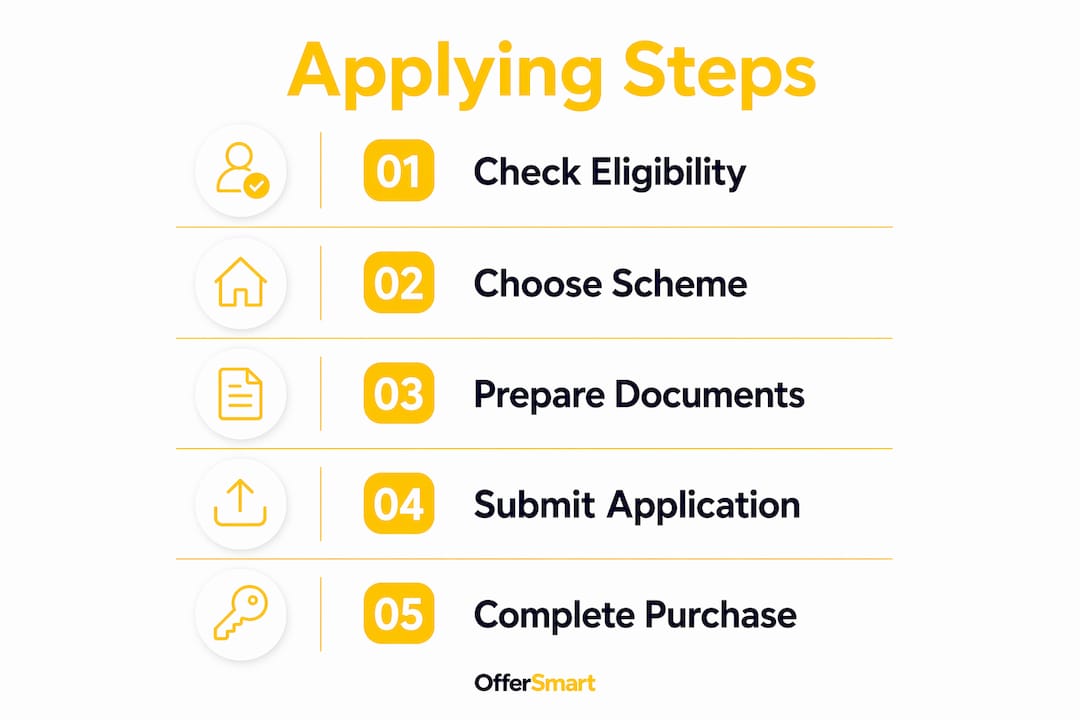
Applying for a first-time buyer scheme is the process of meeting government-set eligibility criteria and following a defined application route to receive financial assistance towards your first property purchase. In 2026, the main government-backed options are the First Homes scheme, the Lifetime ISA, and Shared Ownership. Each has its own rules, application process, and benefits. Understanding how to apply for first time buyer scheme support correctly from the start saves time, avoids costly mistakes, and puts you in the strongest possible position to buy.
What eligibility requirements must first-time buyers meet?
Eligibility for first-time buyers depends on the specific scheme, but several core requirements apply across all of them. You must be a genuine first-time buyer, meaning you have never owned residential property anywhere in the world, including abroad. Lenders and scheme administrators check this rigorously.
The income caps are consistent across the main schemes. The First Homes scheme sets a household income ceiling of £80,000, or £90,000 if you are buying in London. Shared Ownership applies the same income thresholds. These limits exist to target assistance at buyers who genuinely cannot afford to purchase outright.
Each scheme also carries specific requirements beyond income:
- First Homes: You must secure a mortgage covering at least 50% of the purchase price. Some councils add a local connection requirement, meaning you may need to live or work in the area.
- Shared Ownership: You must demonstrate you cannot afford to buy a suitable home outright in your local area. Previous homeowners can qualify if they no longer own property and meet income limits.
- Lifetime ISA: You must be aged 18–39 when you open the account. The property you buy must be priced at £450,000 or below, and you must have held the account for at least 12 months before using it.
Pro Tip: Check your eligibility for every scheme before you start viewing properties. Discovering a disqualifying factor after you have reserved a home wastes your reservation fee and delays your purchase.
Your credit history matters too. Mortgage lenders assess creditworthiness for all scheme-linked purchases, so obtaining a credit report from Experian, Equifax, or TransUnion before you apply gives you time to address any issues.
What are the main first-time buyer schemes and how do they compare?
Three schemes dominate first home buyer assistance in England in 2026. Each works differently and suits different financial situations.

First Homes offers discounts of 30%–50% on new-build properties in England. The discounted price cannot exceed £250,000 outside London, or £420,000 in the capital. You apply through the developer, not a government portal. The discount stays with the property when you sell, so future buyers also benefit.
Lifetime ISA is the primary government savings scheme following the closure of Help to Buy. You can contribute up to £4,000 per year and the government adds a 25% bonus, worth up to £1,000 annually. That bonus is free money towards your deposit. You must hold the account for at least 12 months before withdrawing funds for a property purchase.
Shared Ownership lets you buy a share of a property and pay rent on the remainder to a housing association. You can increase your share over time through a process called staircasing. This reduces the deposit and mortgage you need upfront.
| Scheme | Discount or benefit | Income cap | Property price limit | Who applies |
|---|---|---|---|---|
| First Homes | 30%–50% off new-build price | £80k / £90k London | £250k / £420k London | Developer submits to council |
| Lifetime ISA | 25% government bonus on savings | None | £450,000 | You open account directly |
| Shared Ownership | Buy a share, rent the rest | £80k / £90k London | Varies by housing association | Housing association |
| Scottish First Homes Fund | Interest-free equity loan up to £10,000 | Not publicly listed | £300,000 | Scottish Government portal |
The Scottish Government's First Homes Fund offers interest-free equity loans up to £10,000 on properties up to £300,000, with no monthly repayments until sale. This is a separate scheme for Scottish buyers and runs alongside the UK-wide options.
Stacking schemes is the most effective strategy for maximising affordability in 2026. For example, using a Lifetime ISA bonus as part of your deposit on a Shared Ownership purchase reduces the share you need to buy and lowers your monthly mortgage payment.
Pro Tip: You can use a Lifetime ISA alongside First Homes or Shared Ownership as long as you meet each scheme's individual criteria. Check compatibility with your mortgage adviser before committing.
Step-by-step: how to apply for the First Homes scheme
The First Homes application process is developer-led. You do not apply directly to a government website. Follow these steps in order:
- Find an eligible property. Search for new-build developments in England that are registered under the First Homes scheme. Developers advertise this directly on their sales pages.
- Get a mortgage agreement in principle. Approach a lender or mortgage broker and obtain a written agreement in principle. This confirms you can borrow the amount needed to cover at least 50% of the discounted purchase price.
- Reserve the property. Pay the developer's reservation fee, typically between £500 and £2,000. This holds the property while the eligibility process runs.
- Developer submits to the local council. The developer sends your eligibility evidence to the local authority. This verification process takes 2–4 weeks and includes checks on income, first-time buyer status, and any local connection requirements.
- Receive council approval. Once the council confirms eligibility, you can proceed. Without this approval, the purchase cannot complete under the scheme.
- Instruct a conveyancer. Appoint a solicitor or licensed conveyancer to handle the legal transfer. They will check the title, manage the discount covenant, and liaise with the developer's legal team.
- Finalise your mortgage and exchange contracts. Your lender issues a formal mortgage offer. You exchange contracts and set a completion date.
The documentation you need includes proof of identity, proof of address, three months of payslips or two years of accounts if self-employed, bank statements, and a signed declaration confirming you have never owned property before.
Prepare this paperwork before you reserve a property. Delays in supplying documents are the most common reason the council verification stage overruns its 2–4 week window.
How to apply using the Lifetime ISA and Shared Ownership
The Lifetime ISA and Shared Ownership each have their own application routes, but they work well together.
Opening and using a Lifetime ISA:
- Open an account with a provider such as Moneybox, Nutmeg, or a bank offering Lifetime ISA products. You must be aged 18–39 at the time of opening.
- Contribute up to £4,000 per tax year. The government adds the 25% bonus within approximately 6–8 weeks of each contribution.
- Hold the account for a minimum of 12 months before you can use the funds for a property purchase.
- When you are ready to buy, your conveyancer requests the funds directly from your Lifetime ISA provider. You do not withdraw the money yourself.
Applying for Shared Ownership:
- Contact the housing association managing the development you are interested in. Most advertise through the government's Own Your Home website.
- Complete the housing association's application form, which covers income, savings, and your current housing situation.
- The housing association assesses your application and confirms the share percentage you can afford to buy, typically between 10% and 75%.
- Arrange a Shared Ownership mortgage with a lender experienced in this type of lending. Lenders require the lease to have at least 85–95 years remaining at the point of mortgage approval. For resale properties, always check the lease length before proceeding.
- Sign the lease with the housing association and complete the purchase.
Pro Tip: When combining a Lifetime ISA with Shared Ownership, confirm with your conveyancer that the property price used for the Lifetime ISA withdrawal is the full market value, not just the share price. Using the wrong figure can trigger a withdrawal penalty.
One common mistake is underestimating the ongoing costs of Shared Ownership. Rent on the unsold share, service charges, and ground rent all add to your monthly outgoings. Full financial assessment before committing is not optional. It is the only way to know whether Shared Ownership genuinely saves you money compared to buying outright or renting.
Selling a Shared Ownership property also carries complexity. Housing associations typically hold nomination period rights, meaning they can find a buyer from their waiting list before you can sell on the open market. The sale price is restricted to a professional valuation. Factor this into your long-term planning before you buy.
Key takeaways
Applying for first-time buyer schemes in the UK requires confirming eligibility, choosing the right scheme or combination, and following each scheme's specific application route precisely.
| Point | Details |
|---|---|
| Eligibility comes first | Check income caps, first-time buyer status, and scheme-specific rules before viewing properties. |
| First Homes is developer-led | You do not apply to a government portal; the developer submits your eligibility to the local council. |
| Lifetime ISA needs 12 months | Open the account early and hold it for at least 12 months before you can use the bonus. |
| Stack schemes where possible | Combining a Lifetime ISA with Shared Ownership or First Homes maximises your deposit and reduces borrowing. |
| Shared Ownership has hidden costs | Rent, service charges, and nomination period restrictions affect long-term affordability and resale. |
My honest view on navigating first-time buyer applications
I have seen buyers lose reservation fees and miss out on properties because they started the application process too late. The single biggest mistake is treating eligibility as something to sort out after you find a property you love. By then, you are already under time pressure, and any gap in your paperwork becomes a crisis.
The stacking approach genuinely works, but only if you plan it in advance. Opening a Lifetime ISA the day you start house-hunting is too late if you have not held it for 12 months. The buyers who get the most from these schemes are the ones who opened their Lifetime ISA a year or two before they were ready to buy.
I would also push back on the idea that Shared Ownership is always the affordable option. The nomination period restrictions on resale are a real constraint that many buyers do not fully understand until they try to move on. Read the lease carefully and speak to a solicitor who specialises in Shared Ownership before you sign anything.
Finally, use a specialist mortgage adviser, not just a high-street bank. Advisers who work regularly with First Homes and Shared Ownership lenders know which products are compatible with each scheme and can save you weeks of back-and-forth.
— Rhys
How Offersmart helps you buy with confidence
Before you make an offer on any property, whether through First Homes, Shared Ownership, or outright purchase, you need to know what it is actually worth. Offersmart analyses recent comparable sales on the same road, assesses flood risk, crime risk, and local amenities, and gives you a clear picture of true market value.
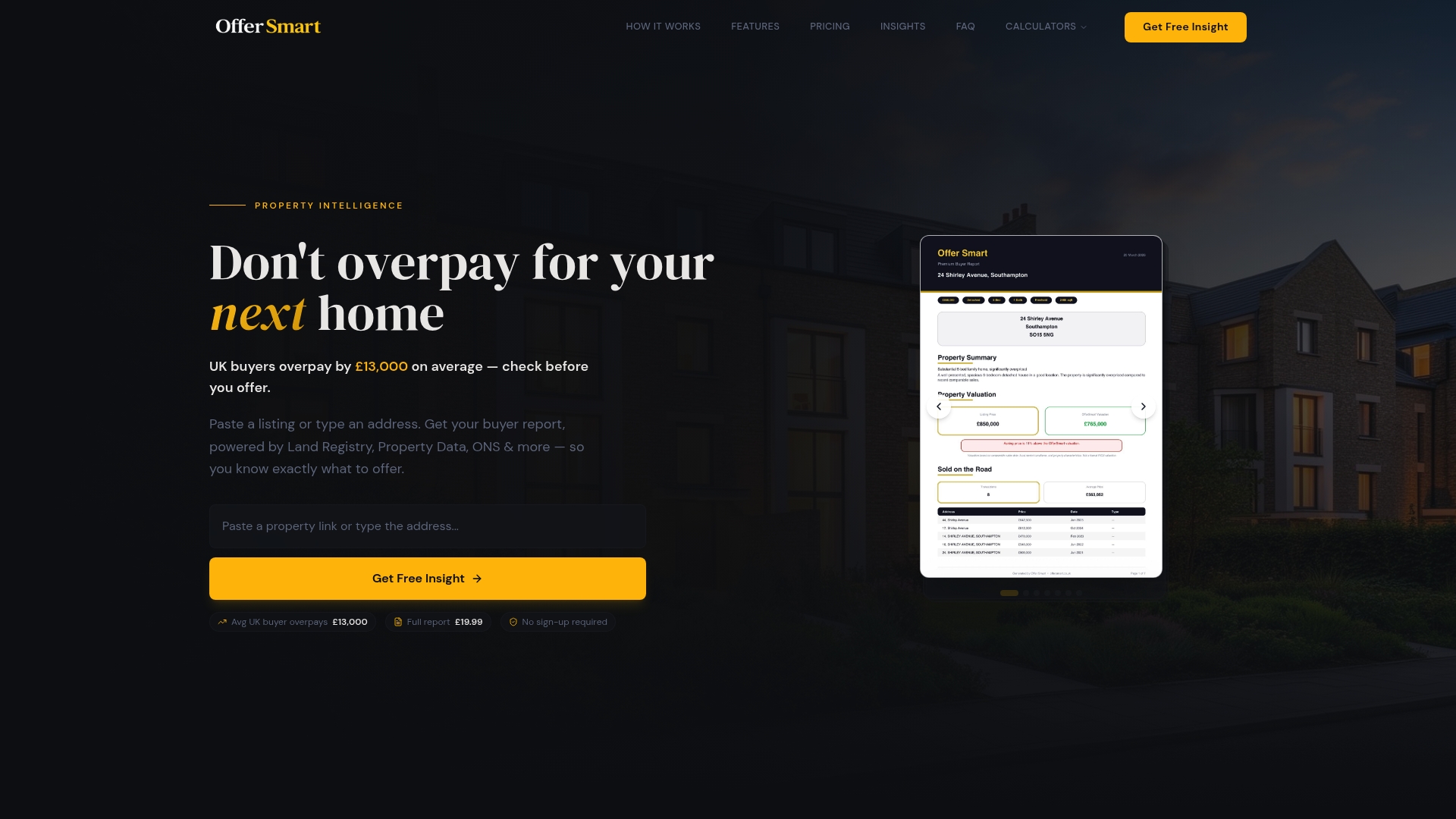
Use the Offersmart mortgage calculator to model your affordability under different scheme scenarios. Enter your deposit, including any Lifetime ISA bonus, and see exactly what you can borrow. You can also explore the full Offersmart calculator suite for deposit planning and running cost estimates. No guesswork. No overpaying.
FAQ
What is the income limit for first-time buyer schemes?
The First Homes scheme and Shared Ownership both cap household income at £80,000, or £90,000 in London. The Lifetime ISA has no income cap.
How long does the First Homes application take?
The council eligibility verification stage takes 2–4 weeks after the developer submits your documents. The full process from reservation to completion typically takes 3–6 months.
Can I use a Lifetime ISA with Shared Ownership?
Yes. You can use your Lifetime ISA bonus as part of the deposit on a Shared Ownership purchase, provided the full market value of the property does not exceed £450,000 and you have held the account for at least 12 months.
Do I need a solicitor to apply for first-time buyer schemes?
You need a conveyancer or solicitor for both First Homes and Shared Ownership purchases. They manage the legal transfer, the discount covenant for First Homes, and the lease agreement for Shared Ownership.
What documents do I need for a first-time buyer application?
You typically need proof of identity, proof of address, three months of payslips or two years of self-employed accounts, recent bank statements, and a signed declaration confirming you have never previously owned property.