

Property research is the single most effective way to avoid overpaying when buying a home in the UK. Thorough due diligence, the industry term for structured property investigation, replaces guesswork with evidence and protects you from costly mistakes before you commit. Effective property sourcing and research can secure discounts of 10%–25% below market value. On a £150,000 property, a 15% discount equals £22,500 in instant equity. That figure alone explains why property research saves money at every stage of the buying process.
How does thorough property research reduce purchase costs and risks?
Thorough due diligence cuts purchase costs by giving you a clear picture of what a property is actually worth before you make an offer. Without that picture, you rely on the asking price, which is set by the seller, not the market. Recognising an overpriced home early means you either negotiate firmly or walk away before wasting solicitor fees and survey costs.
Hidden defects are the second major cost trap. Structural issues, damp, outdated wiring, and drainage problems can each cost thousands to fix. A property survey reveals these before exchange, giving you grounds to renegotiate or withdraw. Buyers who skip surveys to save a few hundred pounds often spend tens of thousands correcting problems they could have anticipated.

For buyers considering investment properties, stress-testing is a non-negotiable step. Running scenarios with 10% higher expenses and 10% lower rents prevents you from overestimating profitability. Deals that fail these tests become liabilities, not assets. Applying pessimistic assumptions before you buy is far cheaper than discovering the numbers do not work after completion.
Pro Tip: Before making any offer, calculate the total cost of ownership including survey fees, solicitor costs, stamp duty, and likely repair bills. Compare that figure against comparable sold prices on the same road, not just the asking price.
The table below shows common research gaps and their typical financial consequences.
| Research gap | Potential cost consequence |
|---|---|
| Skipping comparable sales analysis | Overpaying by thousands above true market value |
| No structural survey commissioned | Unexpected repair bills of £5,000–£30,000 or more |
| Ignoring flood risk data | Higher insurance premiums and reduced resale value |
| Missing local crime and amenity data | Poor lifestyle fit leading to early resale at a loss |
| No stress-test on rental figures | Negative cash flow on an investment property |
What role does market and neighbourhood research play in saving money?
Market research identifies where genuine value exists, not just where prices look low. A cheap postcode with declining employment, poor transport links, and falling population is a value trap. An affordable area with new infrastructure, rising migration, and planned development is an opportunity. Consistent success in property comes from systematic, ongoing market analysis rather than one-off checks.
Understanding local economic indicators before you buy protects your long-term investment. School ratings, crime trends, flood risk zones, and proximity to amenities all affect both your quality of living and the property's future resale value. Buyers who research these factors avoid purchasing in areas that look attractive on paper but underperform over time.
Smarter suburb research tools save 10 or more hours weekly by consolidating data and enabling faster decisions. That time saving matters because slow decisions in a competitive market can cost you the property entirely, or force you into a rushed offer at a higher price. Speed and accuracy together reduce the financial risk of decision drag.
Key market indicators worth researching before committing to any area include:
- Sold price trends on the specific road and surrounding streets over the past 12–24 months
- Local employment rates and the presence of major employers or planned business investment
- Transport connectivity including planned rail or road improvements that lift values
- School Ofsted ratings which directly affect demand and price in family-friendly postcodes
- Flood risk classification from the Environment Agency, which affects insurance costs and mortgage availability
- Crime statistics at street level, not just borough level, for an accurate safety picture
- Planned development including new housing, retail, or infrastructure that signals area growth
Pro Tip: Cross-reference Land Registry sold prices with local council planning portals. Approved developments nearby can signal rising demand, while large-scale social housing schemes can suppress values in specific pockets.
How can modern tools and services enhance cost-effective property research?
AI-integrated research tools reduce due diligence time by 50%–75%, saving 30–60 hours per property acquisition. That translates to labour cost savings of £1,200–£4,700 per deal compared to manual analysis. For buyers managing their own research, that time saving means fewer errors from fatigue and faster, more confident decisions.
Professional property sourcers offer a different kind of advantage. They access off-market properties that never appear on Rightmove or Zoopla. Experienced sourcers achieve discounts of 10%–25% below market value, with professional fees of £4,000–£5,000 easily absorbed by the instant equity gained. For buyers who lack time or local knowledge, this route delivers measurable financial returns.
Buyer's agents operate similarly, representing your interests rather than the seller's. They negotiate on your behalf, access off-market stock, and prevent the costly mistake of paying over the odds due to emotional attachment. Their fees are typically offset by the savings they secure on the purchase price.
The table below compares four research approaches by effort, cost, and typical financial outcome.
| Research method | Time required | Typical cost | Financial benefit |
|---|---|---|---|
| DIY research only | High (40–80 hours) | Low (survey and search fees) | Variable; depends on buyer skill |
| AI-assisted tools (e.g. Offersmart) | Low (hours, not weeks) | Low to moderate | Faster decisions, reduced overpaying risk |
| Professional property sourcer | Low for buyer | £4,000–£5,000 fee | 10%–25% below market value discounts |
| Buyer's agent | Low for buyer | 1%–2% of purchase price | Off-market access, stronger negotiation |
Pro Tip: AI tools and professional sourcers are not mutually exclusive. Use an AI tool like Offersmart to validate any deal a sourcer presents, checking comparable sales and area data independently before committing.
Practical steps for UK home buyers to use property research for maximum savings
Structured research starts with clear criteria. Define your budget ceiling, preferred locations, minimum property size, and non-negotiable features before you begin searching. Focused criteria improve productivity and reduce wasted time on unsuitable properties. Every hour spent viewing the wrong homes is an hour not spent analysing the right ones.
Once you have a shortlist, use local price data to set your offer with confidence. Comparing recent sold prices on the same road tells you what buyers actually paid, not what sellers hoped to achieve. That distinction is where negotiating power comes from.
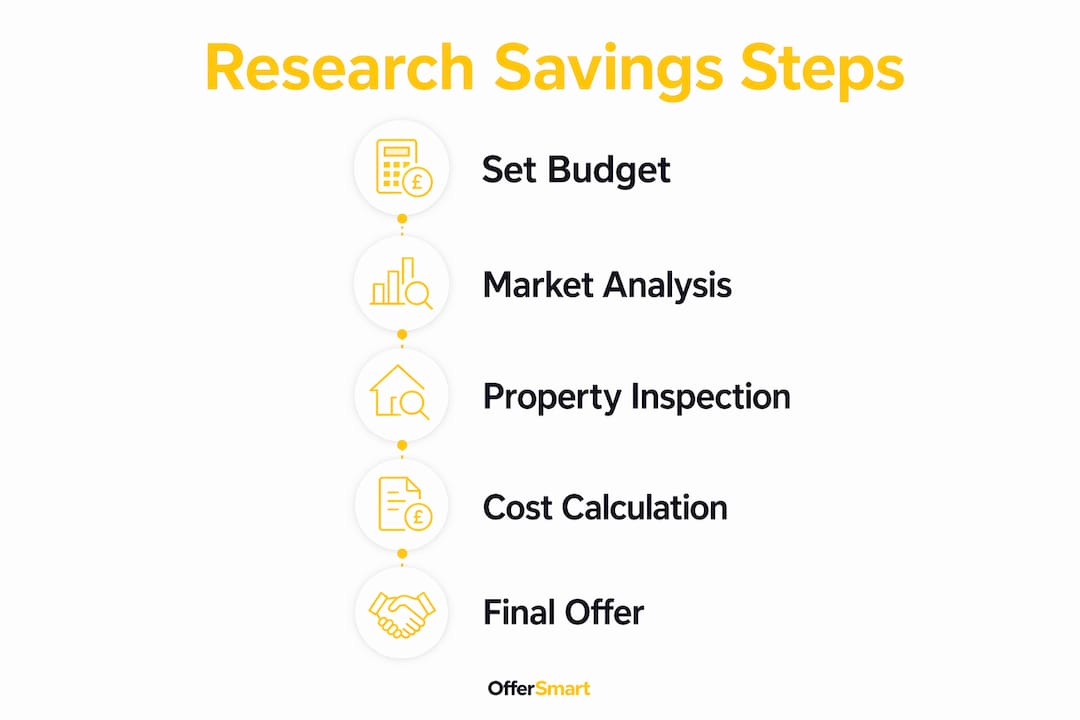
Follow these steps to apply property research effectively at each stage of your UK purchase:
- Set clear search criteria covering budget, location, property type, and minimum condition requirements before viewing anything.
- Research comparable sales using Land Registry data and tools like Offersmart to establish true market value for any property you consider seriously.
- Analyse the neighbourhood using crime data, flood risk maps, school ratings, and local amenity information to assess long-term value and lifestyle fit.
- Commission the right survey for the property type. A Level 3 Building Survey is worth the cost on older or non-standard properties.
- Stress-test your finances by calculating total purchase costs including stamp duty, legal fees, and likely repair spend before making an offer.
- Use a property purchase checklist to track every step and avoid overlooking details that cost money later.
The importance of property investigation extends beyond the offer stage. Reviewing lease terms, service charges, and planning history before exchange prevents nasty surprises that can derail a purchase or reduce its value.
Key takeaways
Thorough property research saves money by preventing overpayment, uncovering hidden costs, and enabling confident offers grounded in real market data.
| Point | Details |
|---|---|
| Research prevents overpayment | Comparable sales data reveals true market value before you make an offer. |
| Surveys uncover hidden costs | Structural and condition surveys expose defects that justify price reductions or withdrawal. |
| Market analysis avoids value traps | Neighbourhood data on crime, flood risk, and schools protects long-term resale value. |
| AI tools cut research time | AI-assisted platforms reduce due diligence time by 50%–75%, lowering the cost of thorough analysis. |
| Professional sourcers deliver discounts | Experienced sourcers secure 10%–25% below market value, often outweighing their fees. |
What I have learned from years of watching buyers skip the research
Most buyers who overpay do not do so because they are careless. They do it because they are in a hurry, emotionally attached, or simply do not know what comparable data to look at. I have seen buyers pay £30,000 above what the sold prices on the same street clearly indicated was fair value. The information was publicly available. They just did not look.
The shift I have noticed in 2025 and 2026 is that AI tools have removed the excuse of "I did not have time to research properly." You can now get a clear picture of market value, area risk factors, and comparable sales in minutes rather than days. That changes the calculation entirely. Buyers who still skip research are not saving time. They are deferring costs.
The other lesson I would pass on is that research is an ongoing discipline, not a one-off task. The buyers who consistently make good purchases are the ones who stay close to local market data between viewings, not just during them. Clarity is a greater advantage in property than speed or scale alone. Build the habit of checking sold prices regularly, and your offer decisions will become sharper every time.
— Rhys
How Offersmart helps you buy with confidence and spend less
Buying a home is one of the largest financial commitments you will make. Getting the numbers right before you offer matters more than any other single step.

Offersmart analyses any UK property address or listing link and instantly shows you comparable sold prices, area risk data, flood and crime information, school ratings, and a realistic offer range. The built-in mortgage calculator and stamp duty calculator give you a full cost picture before you commit. For families, investors, and first-time buyers alike, Offersmart replaces hours of manual research with a clear, data-backed report you can act on immediately.
FAQ
Why does property research save money for UK buyers?
Property research saves money by revealing the true market value of a home before you make an offer. Buyers who understand comparable sold prices and local risk factors avoid overpaying and negotiate from a position of knowledge.
How much can thorough research save on a property purchase?
Effective research and sourcing can secure discounts of 10%–25% below market value. On a £150,000 property, a 15% discount equals £22,500 in savings before you even move in.
What is the most important type of property research for UK buyers?
Comparable sales analysis is the most important starting point, as it establishes what similar properties have actually sold for on the same road. Combine this with a structural survey, flood risk data, and crime statistics for a complete picture.
How do AI tools improve property research outcomes?
AI-assisted tools reduce due diligence time by 50%–75% compared to manual research. That speed means fewer rushed decisions and a lower risk of overpaying due to time pressure or incomplete information.
Is professional property sourcing worth the cost?
Professional sourcers typically charge £4,000–£5,000 but regularly secure properties at 10%–25% below market value. On most purchases, the discount gained far exceeds the fee paid, making sourcing cost-effective for buyers who lack local market knowledge.