

Solicitor fees are the legal and administrative costs you pay to ensure your property purchase is valid, secure, and compliant with UK law. Known formally as conveyancing costs, they cover everything from checking the title deed to submitting your Stamp Duty Land Tax return. Total legal costs in 2026 range from £1,200 to £3,000, including both professional fees and disbursements. Understanding why solicitor fees matter for buyers is not just about budgeting. It is about protecting yourself from risks that can cost far more than the fees themselves.
Why solicitor fees matter for buyers
Solicitor fees cover two distinct types of cost: the solicitor's professional fee for their legal work, and disbursements, which are fixed third-party charges. Both are non-negotiable parts of the conveyancing process in England and Wales.
The professional fee pays for the legal work your solicitor carries out on your behalf. This includes reviewing the contract of sale, raising enquiries with the seller's solicitor, and advising you on any risks before you commit. Disbursements are separate charges your solicitor pays to third parties and passes on to you.
Common disbursements include:
- Local authority searches: £250–£450, revealing planning permissions, road schemes, and environmental risks near the property
- Land Registry fees: Typically £150 for a £300,000 property, paid to register your ownership
- Anti-money laundering checks: £6–£20 per person, a legal requirement for all buyers
- Stamp Duty Land Tax submission: Filed by your solicitor on your behalf, though the tax itself is separate
- Drainage and water searches: Confirm whether the property connects to public sewers
Disbursements are fixed third-party costs that solicitors must separate clearly from their professional fees in any quote. This distinction matters because it tells you exactly what your solicitor earns versus what goes to external bodies. A quote that bundles everything together without explanation is a warning sign.
How property type affects your solicitor fees
Not all purchases cost the same to convey legally. The type of property you buy and the complexity of the transaction directly influence what you pay.

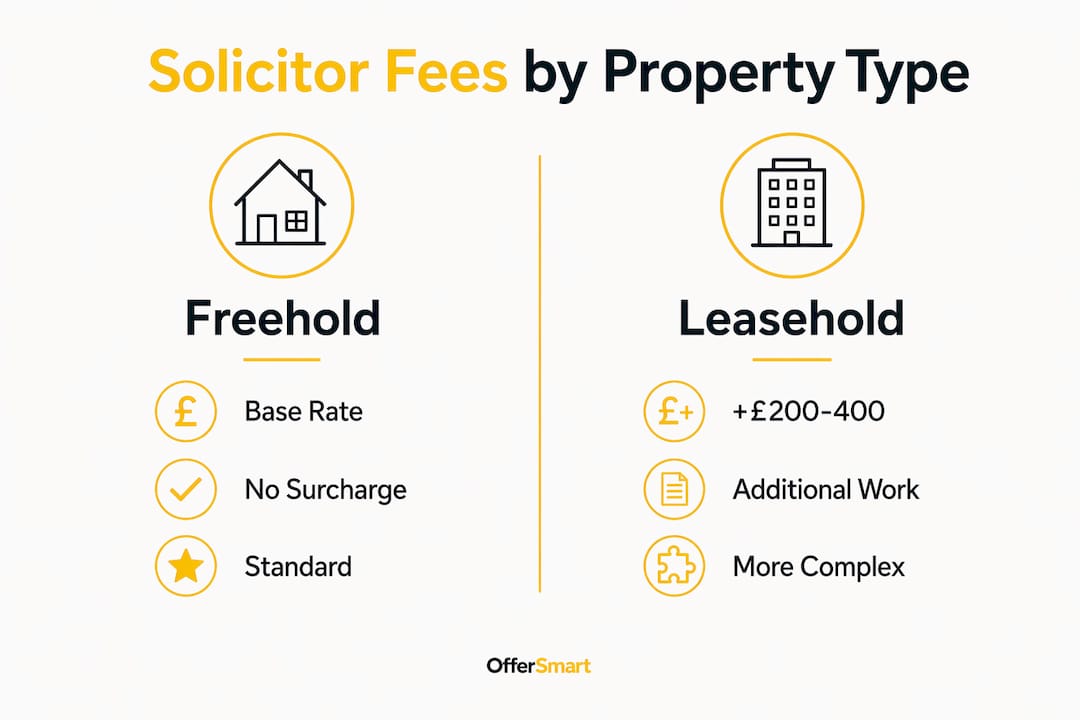
Leasehold purchases add £200–£400 to solicitor fees compared to freehold properties. This is because leasehold transactions require your solicitor to review the lease itself, check service charge accounts, and liaise with the freeholder or managing agent. New-build purchases add a further £200–£500 due to additional legal work around developer contracts and stage payments.
Short leases present the most significant cost risk. Lease extensions under 80 years can require £2,500–£4,000 in additional legal work. Buying a property with a short lease without understanding this cost upfront can derail your budget entirely.
Other factors that increase fees include:
- Mortgage lender requirements: Your solicitor also acts for your lender, which adds work
- Title defects: Issues with ownership history may require indemnity insurance
- Gifted deposits: Require additional declarations and lender sign-off
- Boundary disputes: Can trigger hourly billing rather than fixed fees
Solicitor fee complexity can increase by 30–100% for transactions involving boundary disputes, overseas assets, or business interests. That range is wide enough to turn a manageable budget into a financial shock if you have not planned for it.
Pro Tip: Before making an offer, check the lease length on any flat you are considering. If it is below 85 years, factor in the cost of a lease extension before you commit.
| Property type | Typical additional solicitor cost |
|---|---|
| Freehold house | No surcharge (base rate applies) |
| Leasehold flat | £200–£400 extra |
| New-build property | £200–£500 extra |
| Short lease (under 80 years) | £2,500–£4,000 extra |
Why transparency in solicitor fee quotes matters
A quote is only useful if it tells you the full picture. Many buyers accept the first quote they receive without checking what it actually includes. That is where unexpected costs appear.
Most fixed-fee quotes exclude extras such as mortgage lender work, gifted deposits, or declarations of trust. When these arise, hourly rates of up to £570 may apply. A quote that looks competitive at first glance can grow significantly once conditional extras are triggered.
To compare quotes fairly, follow these steps:
- Request an itemised written quote that separates professional fees from disbursements clearly
- Ask what is excluded from the fixed fee and under what circumstances hourly rates apply
- Clarify the abortive transaction policy. If a purchase falls through, some firms charge only disbursements incurred; others charge for all work completed
- Check who handles your file. Some conveyancing firms assign junior staff without proper supervision, which can cause delays and missed legal issues
- Compare at least three written quotes before instructing anyone
Transparency is your best defence when dealing with solicitor costs. A detailed written quote protects you from bill shock and gives you a clear basis for comparison.
Pro Tip: Ask every solicitor you quote: "What would cause my final bill to exceed this estimate?" Their answer tells you more than the quote itself.
How solicitor fees affect your overall buying experience
The quality of your legal representation directly shapes how your purchase unfolds. Paying appropriate solicitor fees is not a cost to minimise. It is a safeguard against far larger losses.
Expert residential property solicitors reduce the risk of transactional delays, title defects, and legal disputes that can cost thousands more than the initial fees. A solicitor who spots a title defect early can save you from buying a property you cannot sell or mortgage in the future.
Low-cost volume conveyancers often handle high caseloads with limited solicitor involvement. The small extra cost of instructing a qualified solicitor directly can prevent missed issues and costly delays. The price difference between a budget conveyancer and an experienced solicitor is often a few hundred pounds. The difference in outcome can be tens of thousands.
The practical benefits of quality legal representation include:
- Faster completions: Proactive solicitors chase responses and keep transactions moving
- Negotiation support: Your solicitor can negotiate contract terms, not just process paperwork
- Lender compliance: Solicitors acting for both you and your mortgage lender prevent last-minute rejections
- Risk identification: Title searches, flood risk checks, and planning queries are reviewed before you exchange contracts
- Peace of mind: You know the property you are buying is legally sound before you commit
Delaying solicitor instruction until after offer acceptance risks losing money on abortive costs and missing early legal red flags. Instructing a solicitor as soon as your offer is accepted, or even before, gives you the best chance of a smooth purchase. Your property due diligence checklist should include solicitor instruction as one of the first steps.
How can UK buyers budget effectively for solicitor fees in 2026?
Budgeting accurately for legal costs requires knowing the typical ranges and understanding what can push your costs higher. The figures below reflect current market rates for England and Wales.
Average total legal costs in 2026 sit between £1,200 and £3,000, covering both professional fees and disbursements. First-time buyers often pay less, averaging around £1,314, partly because their transactions tend to be simpler with fewer lender requirements.
| Cost component | Typical range |
|---|---|
| Solicitor professional fee | £800–£1,800 |
| Disbursements (searches, Land Registry, checks) | £400–£800 |
| Leasehold surcharge | £200–£400 |
| New-build surcharge | £200–£500 |
| Total (standard freehold purchase) | £1,200–£2,600 |
To budget well, follow these practical steps:
- Get quotes early. Request written quotes before your offer is accepted so you know your legal costs before you commit
- Add a contingency. Budget 15–20% above your quoted fee to cover unexpected extras
- Understand payment timing. Most solicitors require a deposit upfront (typically £200–£500) with the balance due on completion
- Factor in property type. A leasehold flat will cost more to convey than a freehold house at the same price
- Instruct early. Early solicitor involvement can prevent wasted survey and mortgage costs on a property with hidden legal problems
Asking the right questions before exchanging contracts includes understanding exactly what you have paid for legally and what remains outstanding.
Key takeaways
Solicitor fees are a non-negotiable legal cost that protects UK buyers from title defects, financial disputes, and failed transactions, making them one of the most important expenses in any property purchase.
| Point | Details |
|---|---|
| Fees cover two cost types | Professional fees and disbursements must be quoted separately for accurate budgeting. |
| Property type changes the cost | Leasehold and new-build purchases add £200–£500 or more to standard solicitor fees. |
| Transparency protects your budget | Always request an itemised written quote and ask what triggers additional charges. |
| Early instruction saves money | Instructing a solicitor before offer acceptance helps avoid wasted costs on problematic properties. |
| Quality matters more than price | Experienced solicitors reduce the risk of delays, title defects, and costly legal disputes. |
Why I think buyers underestimate legal fees every time
Most buyers I have spoken to treat solicitor fees as a box to tick rather than a decision to make carefully. They accept the cheapest quote, instruct late, and then wonder why their purchase drags on for months or collapses at the last moment.
The uncomfortable truth is that legal fees are the one cost in a property purchase where cutting corners has the most direct consequences. A £200 saving on conveyancing can result in a missed title defect that costs you thousands to resolve, or a delayed completion that causes your mortgage offer to expire.
What I have found actually works is treating your solicitor choice the way you treat your mortgage choice. Compare properly, ask hard questions, and prioritise experience over price. The difference between a solicitor who handles 300 cases at once and one who gives your file proper attention is not always visible in the quote. It shows up when something goes wrong.
Buyers who instruct early, get written quotes, and verify who actually handles their file consistently have smoother purchases. That is not coincidence. It is the direct result of taking legal fees seriously from the start.
— Rhys
Plan your full buying costs with Offersmart
Understanding solicitor fees is one part of budgeting for a property purchase. The bigger picture includes your mortgage repayments, running costs, and the true market value of the home you are buying.

Offersmart gives you a complete financial view before you commit. The built-in mortgage calculator lets you model your repayments alongside estimated running costs, so you can see your total monthly outlay clearly. Enter any UK property address and Offersmart analyses comparable local sales, flood risk, and area data to confirm whether the asking price is fair. Knowing the true value of a property before you instruct a solicitor means you negotiate from a position of confidence, not guesswork.
FAQ
What are solicitor fees when buying a house?
Solicitor fees are the legal and administrative costs paid by a buyer to a conveyancing solicitor to manage the property purchase process. They include the solicitor's professional fee and disbursements such as local authority searches and Land Registry registration.
How much do solicitor fees cost for UK buyers in 2026?
Total solicitor fees for a standard UK residential purchase range from £1,200 to £3,000, covering professional fees of £800–£1,800 and disbursements of £400–£800. First-time buyers typically pay around £1,314 on average.
Do solicitor fees differ for leasehold properties?
Leasehold purchases cost £200–£400 more in solicitor fees than freehold properties due to the additional legal work involved in reviewing the lease and liaising with the freeholder.
What happens to solicitor fees if my purchase falls through?
If a purchase collapses, some solicitors charge only the disbursements already incurred, while others charge for all work completed to that point. Always clarify the abortive transaction policy in writing before instructing a solicitor.
Should I choose the cheapest solicitor quote?
The cheapest quote is not always the best value. Low-cost volume conveyancers often carry high caseloads with limited qualified solicitor involvement, which increases the risk of delays and missed legal issues. Comparing experience and fee transparency matters as much as the headline price.